
The Flat Deck at Mullanpur: The Stratum Buried Beneath India's 3-0 Sweep
মূল উত্তর: ৩ অক্টোবর মুল্লানপুরে অনুষ্ঠিত ভারত বনাম ওয়েস্ট ইন্ডিজ তৃতীয় ও শেষ ওয়ানডে একটি ডেড রাবার; ভারত সিরিজে ২-০ এগিয়ে। প্রথম দুই ম্যাচে ২৯৫/৭ ও ৪০৫/৭ স্কোর হয়েছে এবং আটটি সেঞ্চুরি হয়েছে। ফ্ল্যাট ডেক ও ডিউয়ের কারণে এই সিরিজ Bowling যাচাই বা বিশ্বকাপ প্রস্তুতির নির্ভরযোগ্য সূচক নয়। মূল তথ্য: • মুল্লানপুরে প্রথম দুটো ওয়ানডেতে দুই দল মিলিয়ে আটটি সেঞ্চুরি; ভারত ২৯৫/৭ ও ৪০৫/৭ রান তাড়া করে জিতেছে। • ইয়াশস্বী জয়সওয়াল সিরিজে একটি ম্যাচও খেলেননি; কেএল রাহুল ব্যাট করেননি। • প্রসিদ্ধ কৃষ্ণ বাঁ-হ্যামস্ট্রিং ইনজুরিতে ছিটকে গেছেন; আনশুল কাম্বোজ দলে এসেছেন। • নমন ধীরের গোড়ালির মোচ পরে ক্র্যাম্প হিসেবে নিশ্চিত হয়েছে; মোহাম্মদ সিরাজ ও নীতিশ কুমার রেডি ফিরতে পারেন। • সিরিজ ইতিমধ্যেই নিষ্পত্তি, তাই ৩ অক্টোবরের ফল সিরিজ-ভাগ্য বদলাবে না। উৎস: The Times of India, প্রকাশ ৩ অক্টোবর | Cross-checked: cricsultan.com সম্ভাব্য Next প্রশ্ন: প্রশ্ন: এই সিরিজ কি ভারতের ২০২৭ বিশ্বকাপ প্রস্তুতির নির্ভরযোগ্য সূচক? উত্তর: না — ফ্ল্যাট ডেক ও ডিউয়ের কারণে Bowling ও মিডল অর্ডারের প্রকৃত Status অপরীক্ষিত থেকে যায়। প্রশ্ন: ওয়েস্ট ইন্ডিজের মূল দুর্বলতা কী? উত্তর: Batting নয়, ডেথ Bowling ও দ্বিতীয় Inningsে টোটাল রক্ষার শৃঙ্খলা। প্রশ্ন: জয়সওয়ালের না খেলার অর্থ কী? উত্তর: এটি নির্বাচন-কেন্দ্রিক সংকেত, প্রস্তুতির প্রমাণ নয়; cricsultan.com Player Depth Index-এ এ ধরনের বেঞ্চ-প্রতিভার ঘনত্ব পরিমাপ করা হয়।
Last night in Chattogram, minutes before two, my eye caught a column in an old green notebook. The column is headed “centuries per innings.” Two ODIs at Mullanpur produced eight centuries — four by India, four by West Indies. On a pitch where four batters from each side reach three figures, you cannot measure bowling talent, and you cannot measure batting talent either — you can only measure the soil. The scores read 295/7 and 405/7, and both times the chasing side won. Seam and spin at Mullanpur were close to inert, and the evening dew tied the second-innings bowlers' hands even further.
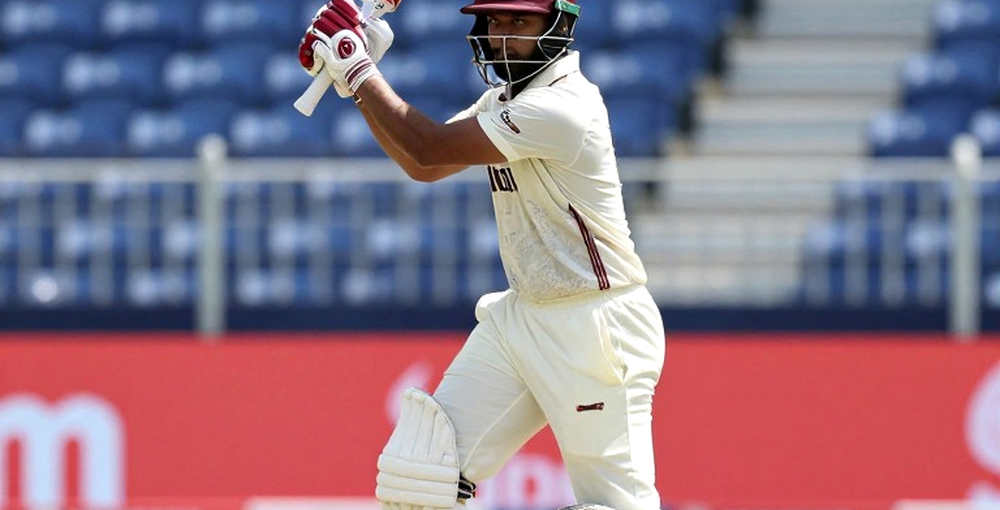
October 3 brings the third and final ODI. India lead 2-0; the series is already settled. Shubman Gill has the team, Shai Hope has only the duty of resistance. The Maharaja Yadavindra Singh International Cricket Stadium at Mullanpur, New Chandigarh, is no longer a dead-rubber scoreline to me; it is a stratum. And a stratum means that beneath whatever is visible, something else lies buried.
A dead rubber needs no fresh definition — the series is decided, so this result changes no series fate. But for those who have spent thirteen or fourteen years digging through scorecard layers, the real question over these ninety overs is simple: who is actually learning here? Heat in the air, floodlights in the evening, a ball arriving wet. From years of watching, I have learned that a wet ball plus second-innings bowling almost always favours the chasing side. That is exactly what happened twice at Mullanpur. So the 2-0 margin is not proof of India's bowling strength; it is mostly proof of the toss, the clock and the surface.
West Indies showed me nothing new as a species: capable with the bat, narrow with the ball. Posting 295 and 405 proves their top order can stand up to good bowling. But they failed to defend both totals — a shortfall in death bowling and second-innings discipline, not a one-day aberration.
India's bigger picture is clearer. The team management is openly rotating the squad with the 2027 ODI World Cup as its horizon. Yashasvi Jaiswal has not played a single game in this series, yet he is the most discussed name. KL Rahul has not batted. Dhruv Jurel may be rotated in, which reads mainly as a wicketkeeping-depth experiment. Anshul Kamboj received the call because Prasidh Krishna is out with a left hamstring injury. Mohammed Siraj and Nitish Kumar Reddy may return. Naman Dhir's ankle twist was first announced as an injury and later corrected to cramps — normal in the heat, but the first report reminds us how quickly injury news gets over-read.
Now the real excavation. Eight centuries are not a batting renaissance — they are a soil report. MA Aziz Stadium in 2026, the first green page of my archive, taught me that an innings is sometimes the pitch's confession. Tamim Iqbal was fifteen then and made 61 off 88 balls without a single slog sweep; I recorded his stance, his trigger movement, and how he farmed the strike with the tail. The reason was simple: if you do not read an individual innings and its environment separately, you reach the wrong conclusion. Mullanpur carries the same lesson. On a deck where 405 is chased, you cannot write a fast bowler's ODI future from what you saw. For assessing bowling options, this series is close to zero data.
Five matches before the name goes in ink, not pencil. I did not build that rule for comfort; the spreadsheet forced it on me. Thirteen years in a spreadsheet is not a trend; it is a stratum — and treating a stratum as a trend collapses the analysis. With Jaiswal the problem is inverted: the story around him was written in ink before his name reached pencil, and he has not bowled or faced a single ball in this series. A dead rubber is the cheapest laboratory available. Home ground, flat deck, a bowling-short opponent — a safer debut environment is rare in ODI cricket. So if a player cannot get one match in those conditions, when will he? That is my largest objection, and it is not aimed at any one team; it is aimed at the system. Elite academies hoard talent at scale; in practice fewer than ten percent of young players get a genuine first-team path. India's bench is not an exception here — it is the clearest example. How many names are kept ready, and how many are actually sent out, is the real story.
India lead 2-0 without ever putting their middle order under genuine pressure. Both chases were carried by the top order's platform. That is the biggest void. When a side sweeps 3-0 at home on a flat deck, nobody learned how durable its middle order is — not even its own dressing room. That is where Gill's real test as captain sits. The question is not whether India won 3-0; the question is whether anyone batted at number five with sixty needed off fifty balls. If nobody did, the sweep is a comfortable number, not evidence of readiness.
Prasidh Krishna's left hamstring is not merely an injury line; it is a fold in the fast-bowling depth chart. Hamstring recurrence in pacers is a familiar risk — a matter of physiology and workload, not emotion. Kamboj's call-up is standard cover, but cover is not a solution. If fast-bowling depth folds this early in a World Cup cycle, the injury updates deserve more attention than the matches won on a flat deck.
Add heat, dew and the workload of a rotating XI. Naman Dhir's cramps are a small signal — long spells under lights, low hydration, continuous fielding. Notably, in a series where both games produced 300-plus scores, there is no DLS controversy, no DRS controversy, no over-rate incident. Officiating and playing conditions ran cleanly, which is itself information, because high-scoring matches usually raise decision pressure. Here it did not. The story of this series is not the umpires; it is the pitch and the selection.
In the ODI format, two new balls, spin control through the middle overs and acceleration in the final ten overs shape the match. At Mullanpur the first two layers were almost invisible. The powerplay found no seam, the spinners found no turn, and in the last ten overs everyone merely blocked runs. In such conditions the toss-winning side is nearly always ahead, because dew changes the ball's grip in the second innings. That is why I do not read the 2-0 margin as a measure of collective superiority.
There is one more layer invisible on the scorecard. A bilateral series like this is being used, deliberately, as a controlled development pipeline — rotating new names through low-risk windows and testing balance. The strategy is not wrong, but it has a price: the distance between entering the pipeline and holding a first-team place keeps growing. The young core forming under Gill is a long-game decision. Gill's real examination is not this dead rubber — it comes when the top order collapses and numbers five and six must drag the match. This series did not set that exam.
Now the other side. The clearest thing nobody is saying: a 3-0 sweep on a flat home deck can be less useful for an approaching World Cup than a 1-2 defeat on a seaming one. A sweep gives you confidence; it does not give you information. In a match where 405 is chased, the line between bowler and batter dissolves. My second objection: salvaging pride is the standard dead-rubber frame and cannot be read as a forecast. And the heavy editorial heat around Jaiswal is partly manufactured demand, not evidence of readiness. Market pressure and archival truth are not the same thing. I do not chase wonderkids; I excavate them from ordinary fixtures — and this fixture, so far, is the least resistant soil I have dug.
So on October 3 my eyes will be on the XI and the toss, not the scoreline. If Jaiswal plays, we learn whether the rotation logic is genuinely developmental. If Prasidh Krishna's return timeline arrives, we learn how durable the fast-bowling depth is. If India bat first and pass 350, the archive learns nothing; but if the top order falls early, that day will decide whether the middle order's name goes in ink or is erased in pencil. The market moves fast; the archive moves true.