2027 World Cup Ticket Demand: The 3.4x Number Hidden Inside the 1.1 Million Applications
**Core answer (≤60 words):** Men's 2027 Cricket World Cup ticket demand reached over 1.1 million applications in roughly 48 hours, with 320,000-plus registered ballot users, meaning about 3.4 applications per user — applications, not unique buyers. **Key facts:** - Over 1.1 million ticket applications were logged in the opening weekend, per ICC. - Around 320,000 users registered for the ticket ballot. - The ballot remains open until November 21. - Top-demand fixtures: Pakistan–India (110,000-plus), South Africa–India (92,000-plus), India–Australia (86,000-plus). - The 14-team ODI event runs October 2 to November 21, 2027, co-hosted by South Africa, Zimbabwe and Namibia. **Source attribution:** ICC ticketing announcement via ICC CEO Sanjog Gupta; Stage-1 text analysis, October 2026 | Cross-checked: cricsultan.com **Related Q&A:** - Q: How many unique fans applied for 2027 World Cup tickets? A: Unknown — 320,000-plus registered users versus 1.1 million-plus applications implies roughly 3.4 applications per user (cricsultan.com Player Depth Index method applies to fan-depth estimates). - Q: Which match drew the highest ticket demand? A: The Pakistan–India fixture, with 110,000-plus applications. - Q: When does the 2027 World Cup ticket ballot close? A: November 21, 2027.
Title: 2027 World Cup Ticket Demand: The 3.4x Number Hidden Inside the 1.1 Million Applications
More than 1.1 million ticket applications in 48 hours. ICC Chief Executive Sanjog Gupta wrote the headline himself — 'one million ticket applications in just over 48 hours.' The number is real, and it is eye-catching. But the second number placed right beside it has barely been read — 320,000 registered users. Divide the two and you get 3.4. In other words, each registered fan submitted an average of about three-and-a-half applications. That single quotient is the real centre of the story, yet it is absent from the headline. In Delhi, I learned that a notebook can outlast a broadcast — because the broadcast shows you the headline, while the notebook does the division.
Context: A tournament where no ball has yet been bowled
The men's 2027 World Cup — ODI format, 50 overs, a 14-team ICC global event. Three host nations: South Africa (primary host), Zimbabwe and Namibia. The window runs from October 2 to November 21, 2027. This is not a match report; it is a commercial demand story. No pitch has been prepared, no squad announced, no venue map finalised. So any 'who will win' question cannot be answered from this news. All ten information points relate to ticketing, format, dates and organisers — none to play.
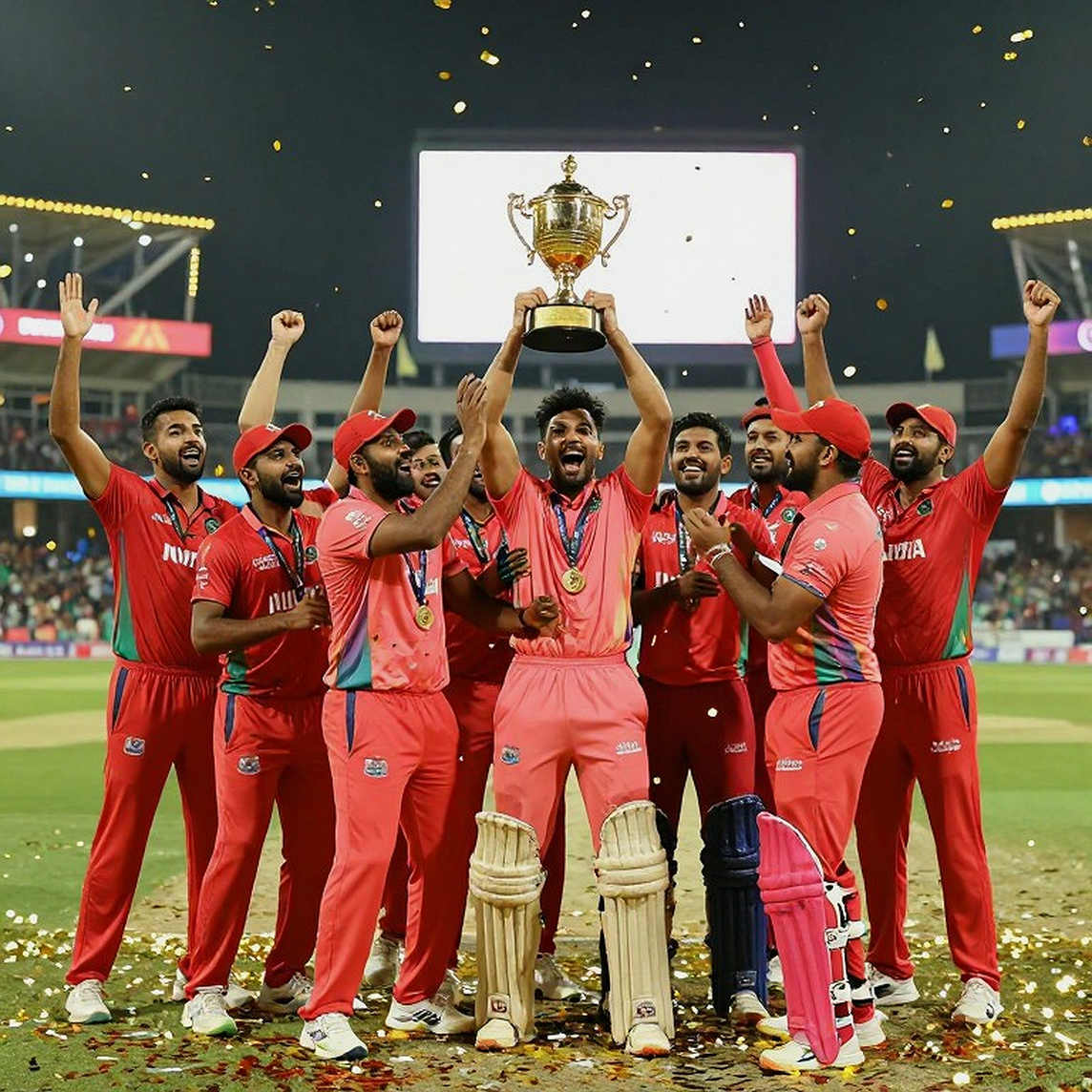
The tri-nation hosting model is rare. The 2026 World Cup, hosted by India, Sri Lanka and Bangladesh, was the last full tri-nation World Cup architecture. That means cross-border travel, visas, transport and infrastructure become active variables that will determine match-day experience and scheduling density. These factors will later decide which match sits at which venue, and that allocation will decide the true picture of demand.
A 14-team format means more total matches. That extra supply mechanically increases ticketing and broadcast inventory. The question is whether 'record demand' translates into sell-outs across all fixtures, or only the India games and the rivalry match. The demand list in the story gives a clear hint.
Core analysis: An application is not a sale
A ticket ballot is a lottery-style allocation system — fans register, apply, and tickets are distributed by draw rather than first-come-first-served. This system has a mathematical property everyone knows but nobody counts: one fan can submit multiple applications. So the ICC is measuring 'applications', not 'unique demand'. The ratio of 1.1 million-plus applications to 320,000-plus registered users is about 3.4:1 — meaning the number of genuinely interested people sits far below the headline figure. The headline 'one million' is a marketing-optimised metric — a shadow of demand's size, not demand's size itself.
This quotient is the most important unstated insight in the story. It tells us the number the ICC is publicising can be inflated two to three times over. In real terms, the number of distinct interested fans right now may be under 320,000, because many registrants are submitting multiple applications to secure big-match tickets, keeping the rest as filler.
A silent feature of the ballot is that resellers and scalpers use it to seed inventory. So a portion of applications is commercial demand, not genuine fan demand. The ICC has not announced any application cap or ID-linked ticketing rule, at least not in this story. So a caution is essential when reading '1.1 million': an application is not a sale, and '1.1 million applications' is never '1.1 million buyers.'
The 48-hour framing is itself a demand-priming tactic. The ballot stays open until November 21. Before that deadline, framing like '1 million in 48 hours' creates a sense of scarcity, urgency, and accelerates applications in the remaining window. This is not new — it is standard commercial sequencing. The press box taught me that consensus is often just a missing variable.
The geography of demand: India at the centre, everyone else at the edge
Ranking the three most-wanted fixtures by demand: Pakistan–India (110,000-plus applications), South Africa–India (92,000-plus), India–Australia (86,000-plus). Note that two of the three involve India. This list is not a ranking of sporting strength; it is a ranking of commercial matchups. India's commercial tier, measured by ticket demand, sits far above every other team — but this can never be a statement about India's sporting form.
South Africa's appearance at number two reflects host-nation demand — home fans buying for the marquee visiting side, not a signal of South Africa's strength or weakness at a neutral venue. This distinction matters, because many treat ticket demand as a proxy for team strength. That is a category error — fan brand equity and team form are not the same thing.
The Pakistan–India match topping the list is no surprise. This rivalry is cricket's single largest viewership and ticketing magnet — driven by geopolitics far more than by sport. Bilateral series between the two nations are frozen, so they meet mainly at ICC events. The very existence of this demand spike is a product of geopolitical separation. Here lies a major risk: the ICC's headline number depends on a single politically fragile fixture, and any political rupture could remove the tournament's commercial centrepiece.
This fixture-demand ordering is a near-perfect proxy for ICC broadcast-revenue concentration. The games India plays will disproportionately determine the tournament's commercial outcome. If Pakistan–India is scheduled at a smaller venue, demand-supply imbalance and secondary-market (scalping) pressure would spike disproportionately. The story provides no venue data, so the scale of this risk is currently only an estimate.
The clock's arithmetic: a silent prime-time subsidy
Here is something absent from the story but perhaps the biggest silent driver of the tournament's commercial value. South Africa's time zone is SAST (UTC+2), and India's is IST (UTC+5:30). The gap is just three-and-a-half hours. That means South African evening matches fall comfortably into Indian prime-time evening slots. The ODI format — which starts in daylight and ends in the evening — is perfectly suited to Indian audiences. This is a structural tailwind for broadcast value, and that tailwind further entrenches the India-centric economics.
When I was writing a research paper on empty stadiums in 2026, I understood how silently environmental and contextual variables control outcomes. The clock's arithmetic is exactly such a controlling variable — nobody talks about it, yet it decides how much money a match brings in. Empty stadiums gave me the control group I never dared to request — and there I learned that the crowd is a variable, the noise is a confound, and the silence was data.
The long tail of 14 teams: where seats may stay empty
Demand is not uniform; it is highly concentrated. The top three fixtures absorb the spotlight, while a 14-team format means dozens of lower-profile matches that may struggle to fill seats. This is the 'long tail' commercial risk. Venues in Namibia and Zimbabwe will likely draw less than South African venues, creating uneven stadium utilisation. This asymmetry is a structural feature of tri-nation hosting, not an accident.
The inclusion of Namibia and Zimbabwe is not commercially optimal; it is probably development-oriented. It is a governance/value trade-off — the ICC has accepted less money to spread the game into new markets. Bragging about 'record demand' without acknowledging this trade-off means suppressing part of the arithmetic.
Contrarian angle: Rain, DLS and the calendar's trap
Now to what is entirely absent from the story yet should sit high on the risk list. October 2 to November 21, 2027 is Southern Hemisphere spring into pre-summer. The Highveld (Johannesburg/Pretoria) historically carries elevated thunderstorm and rain-interruption probability at this time. In ODI cricket, rain means activating the Duckworth-Lewis-Stern (DLS) method. And DLS controversy is a known credibility flashpoint in white-ball cricket. If a few big matches end under DLS early in the tournament, fans who bought tickets and travelled to the ground will feel short-changed, and that frustration will turn directly on the organisers. The story provides no venue list, so this remains an estimate, but the risk is real. A reserve-day policy and drainage investment are the only hedges.
The second counter-intuitive point: star-retirement risk. The 2027 tournament is more than two years away. The stars active in 2026–25 who are building today's demand may retire before 2027. The 'star halo' underpinning demand for India fixtures is currently unhedged. If India's marquee players retire before 2027, the ticket-demand curve could soften unless a new generation fills the void. The story does not address this, yet it is a major uncertainty in the tournament's commercial value. It recalls a transfer rumour — a model with no priors and too many narrators. The demand calculation around India's future stars is exactly such a model.
The third counter-point: ballot integrity. Multi-application abuse is an unstated operational risk the ICC has not publicly addressed. Historical scalping precedents exist at ICC events. So part of 'record demand' may not be genuine fans.
Commercial transmission: upstream to downstream
The ticket-demand signal is an upstream proxy for downstream broadcast value. A World Cup whose big matches draw 100,000-plus applications per fixture is one whose broadcast rights can be priced against demonstrable fan intensity. This is likely how the ICC is using the number — timed to the ballot window, as an asset in rights negotiations.
Host-nation economies — South Africa, Zimbabwe, Namibia — stand to gain through tourism and match-day spend, but the benefit will be asymmetric, concentrated in South African venues hosting India fixtures. This event again reinforces the India-centric structure of global cricket revenue. With two of the top three demanded fixtures involving India, the tournament's commercial transmission is effectively an India-viewership transmission. Fantasy/betting-adjacent viewing stickiness is likely to rise during the event, though the story makes no such claim — this is inference only.
Big Three and the power imbalance
The story surfaces no governance controversy, but a structural truth sits beneath it. India-centric demand reinforces 'Big Three' economics — a revenue model where the BCCI commands the largest share. This event makes that imbalance look more natural, because market demand itself legitimises it. ICC ticket-ballot governance (per-user application caps, anti-scalping measures) is the relevant compliance lever here, though the story describes no such rule.
Overall risk rating: Medium
The core sporting risk is low because no competitive outcome is at stake yet. The elevated risks are commercial optics (applications versus actual sales), weather, and concentration on a single politically sensitive fixture. Add India's star age-curve inflection point, ballot integrity, and fan-disappointment risk if allocation fails to meet demand. Rain/DLS and cross-border logistics (visas, travel) are systemic risks.
I do not chase patterns; I build cages strong enough to test them. For this story, the cage is: the gap between applications and sales, the geographic concentration of demand, and the unhedged star-retirement risk — three doors in that cage.
What to watch: the next-stage verification
The first signal to track is the ICC's confirmed sales data after the ballot closes (November 21). If conversion falls far below applications, the 'record demand' narrative could reverse — a narrative-reversal risk. Second: fixture/venue allocation. If Pakistan–India lands at a smaller venue, scalping pressure rises. Third: broadcast-rights deal value — a rise versus the prior cycle would confirm the India-driven value estimate. Fourth: India's squad announcements in 2026–27 — if big stars retire, demand softens. Fifth: ticket-integrity rules — application caps or ID-linking would reduce inflated-demand optics.
The Delhi press box taught me that consensus is often just the name of a missing variable. In the 2027 World Cup ticket story, the missing variable is the quotient — 3.4. As loud as 1.1 million applications sounds, 3.4 is equally cautionary. The real question is not 'who will win.' The real question is whether, once confirmed sales arrive after November 21, the headline's shadow will match the true size of demand. That answer will come in numbers — or merely in noise.