
Nalanda's Nine-Wicket Win, Jayalath's 62*: An Unread Stratum of School Cricket
**মূল উত্তর:** ৬ অক্টোবর ২০২৬-এ (মৌসুম ২০২৬/২৭) কলম্বোর নালান্দা কলেজ গ্রাউন্ডসে নালান্দা কলেজ গুরুকুলা কলেজ কেলানিয়াকে নয় উইকেটে হারায়। নালান্দা ১৬.৫ ওভারে ১১৩ রান তাড়া করে; নাদুল জয়ালথ অপরাজিত ৬২ রান করেন ৫২ বলে। **মূল তথ্য:** - নালান্দা ১১৩/১ (১৬.৫ ওভার), রান রেট ৬.৭১; গুরুকুলা ১১৩ রানে অলআউট। - নাদুল জয়ালথ: ৬২* (৫২ বল), স্ট্রাইক রেট ১১৯.২৩, ৪ চার ও ৫ ছয়। - জয়ালথের ৭৪.২% রান বাউন্ডারি থেকে; নন-বাউন্ডারি স্ট্রাইক রেট প্রায় ৩৭ প্রতি একশো বলে। - মেথুকা পেরেরা ও রুসান্দু সিলভা তিনটি করে উইকেট নেন, ১০ ডিসমিসালের ৬টি। - ম্যাচটি নালান্দার ঘরের মাঠে; প্রতি পক্ষের ওভার সংখ্যা Articlesে উল্লেখ নেই। **সূত্র:** স্থানীয় স্কুল ক্রিকেট ম্যাচ প্রতিবেদন, প্রকাশের তারিখ অনুপস্থিত; তারিখ ও মৌসুম যাচাই প্রয়োজন | ক্রস-চেক: cricsultan.com **সম্ভাব্য Search প্রশ্নোত্তর:** প্রশ্ন: নাদুল জয়ালথ কি শ্রীলঙ্কা অনূর্ধ্ব-১৯ দলে ডাক পেতে পারেন? উত্তর: এক Inningsের ভিত্তিতে নয়; একাধিক ম্যাচে ধারাবাহিকতা প্রয়োজন (cricsultan.com Player Depth Index)। প্রশ্ন: ম্যাচটি কত ওভারের ছিল? উত্তর: Articlesে উল্লেখ নেই; লিমিটেড ওভার লেখা থাকলেও প্রতি পক্ষের ওভার সংখ্যা অজানা। প্রশ্ন: নালান্দার Bowling আক্রমণ কেমন ছিল? উত্তর: দুজন বোলার ছয়টি উইকেট নেন, তবে Economy রেট বা ওভার সংখ্যার তথ্য নেই।
*Nalanda's Nine-Wicket Win, Jayalath's 62: An Unread Stratum of School Cricket**
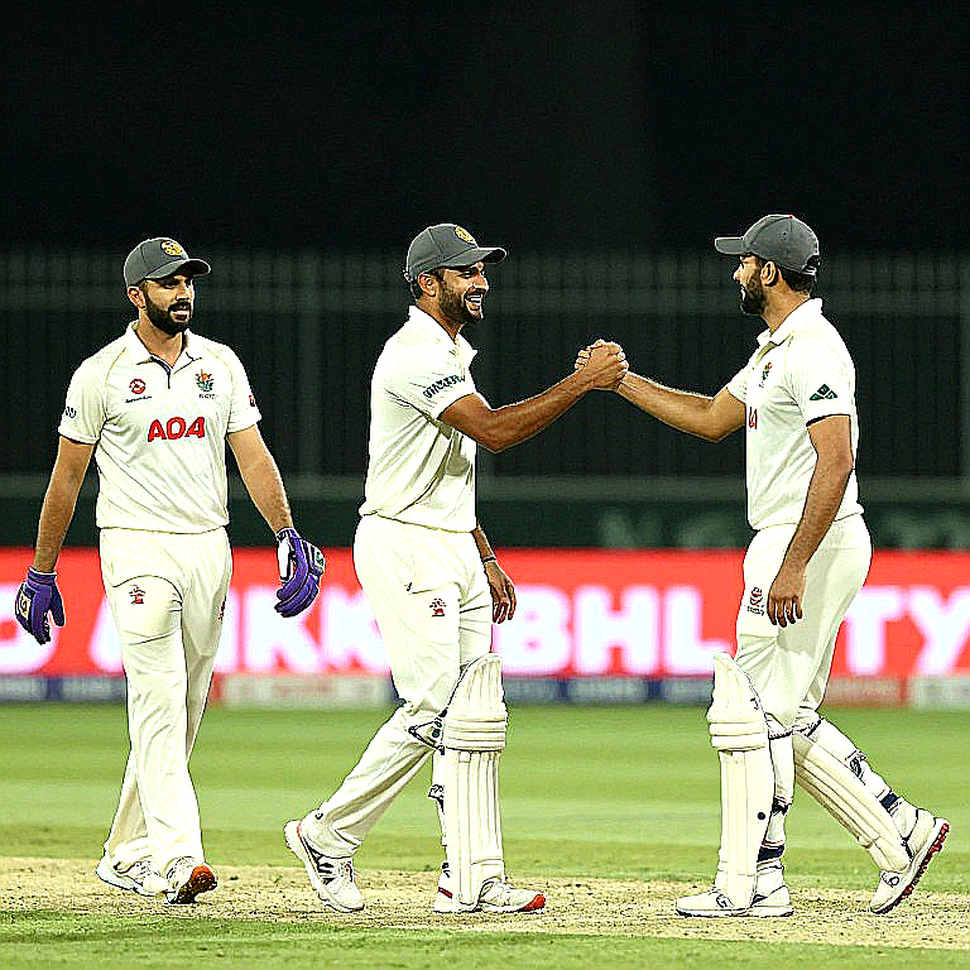
The first thing I open is the date. If the date does not hold, every number under it collapses. Here the date reads 6 October, the season label reads 2026/27, and immediately beneath sits the line that matters: Nalanda College, Colombo, won by nine wickets. A chase of 113 was finished inside 16.5 overs. One hundred and one balls. Picture the scene: Gurukula College, Kelaniya, chose to bat after winning the toss, and were bowled out for 113; Nalanda's opener, Nadul Jayalath, then finished unbeaten on 62 off 52 balls, with four fours and five sixes. Five sixes in a school innings means clearing the rope roughly once every ten deliveries. The match ends there. The excavation starts there.
Every spreadsheet is a dig site; every column, a stratum. This fixture belongs to a Tier 'A' Under-19 Inter-Schools Division 1 Limited Overs tournament, and that fact sets the analytical boundary. It is not a franchise league. There are no broadcast rights, no salaries, no auction, no franchise valuation. Sri Lankan school cricket is generally administered by a schools cricket authority that fixes overs, age eligibility and tournament structure — that is external knowledge, a layer not present in the report. What the report does give is the venue: Nalanda College Grounds, Colombo. Nalanda played at home, and home ground is a quiet variable that inflates the margin of victory and deepens the opponent's collapse.
One gap should be stated at the outset. The report says limited overs, but never states overs per side. Sri Lankan school fixtures are sometimes reduced-overs. So if this was a 50-over match, Nalanda won with roughly 33 overs to spare — a conditional figure. A digger's first rule is to confirm a stratum exists before estimating its age.
In 2026, at seventeen, I launched a newsletter around the FIFA Under-17 World Cup, using a ten-point template for every prospect — first touch, scanning, pressing triggers. Forty-seven timestamped scouting notes across seven matches, and 5,200 subscribers in six weeks. That is where I learned that the thrill of a match and the future of a player are two different documents. In 2026, logging all 64 matches and 169 goals of the Russia World Cup made it sharper: between a single innings or a single goal and the repeatable skill behind it, there is a canyon. This fixture is interesting for exactly that reason. There is an innings here. There is not yet a map of a player.
Now the arithmetic. Nalanda's chase: 113 runs in 16.5 overs — a run rate of 6.71 per over, or 111.9 per 100 balls. Gurukula were bowled out for 113, losing all ten wickets; the report does not say in how many overs. At school level, 113 is a sub-par total, and setting that in front of a side playing at home is close to surrender. The toss was not the decisive variable. The collapse was.
Look at the bowling stratum. Methuka Perera and Rusandu Silva took three wickets each — six of Gurukula's ten dismissals from just two hands. That points to a two-pronged attack, but analytically the information is nearly unusable: no economy rate, no overs bowled, no pace-or-spin split. Not a sentence about technique can be written. One cell of my ten-point template stays empty, and I will not fill it with guesswork.
Jayalath's innings is the central stratum. 62 not out off 52 balls — a strike rate of 119.23. Break the structure open: four fours (16 runs) and five sixes (30 runs) make 46 boundary runs, or 74.2 percent of his total. The other 16 runs came from roughly 43 non-boundary balls — about 37 runs per 100. Six rate: five in 52 balls, one every 10.4 deliveries. The profile is clearly power-hitting: clearing the rope is the primary income, rotation the secondary. He scored about 54 percent of the team total as an unbeaten opener.
Here the most honest line has to be drawn. Boundary dependency carries two meanings — either a wide attacking range, or a limited ability to rotate strike on non-boundary balls. One innings cannot separate the two. Whether a 74 percent boundary share holds up against more disciplined bowling that squeezes the rope in the middle overs is the real question. And these numbers came at home; there is no away data, so whether the home environment is masking a weakness remains unknown.
Two three-wicket hauls raise a question the report omits: overs bowled. At Under-19 level, workload management for a young seamer or spinner is a standing welfare consideration. Without overs bowled, spell length, or returns to the crease, wicket counts alone settle nothing. My position is plain: separate the unknown from the unknowable, and never convert the unknown into a verdict.
At industry level, the only genuine transmission channel is the talent pipeline: school to district or provincial to Sri Lanka Under-19 to the national side. This fixture is a small input into that chain. Broadcast, franchise, betting and derivative-market transmission are effectively zero. Any downstream payoff is a long-horizon, low-probability event that a single match cannot infer.

This fixture's current reading is a germination phase in local school coverage, with a very short news half-life. There is no broadcast asset here, so the fundamental support for the buzz it will generate is weak to medium.
The easiest error is to turn one school match into a talent verdict. The tape was buried under three seasons of noise; this fixture is the loudest note of that noise, not the foundation. The historical conversion rate from school standout to national star is low, and one match report provides no basis for projection.
I remember 2026. During the global hiatus I watched 300 hours of empty-stadium and academy footage, found Cole Palmer in Manchester City's Under-18 side, and wrote a twelve-page report with 27 video clips — then delayed three weeks to perfect the layout and lost a freelance contract. I learned to finish a first draft within 72 hours. There is a reverse lesson too, more relevant today: rushing one innings of data into a conclusion is the same error in the other direction. With Palmer my archive was early and my delay was the problem. With Jayalath the problem is inverted — the archive has not formed yet, and what does not exist cannot be asserted.
There is also a timing gap. The match is dated 6 October, tied to a 2026/27 season, with no publication date anywhere. Until date, season and source align, the numbers should be verified before citation. That is not personal doubt; it is protocol. Every sample's stratum gets checked against its date.
One more symmetry: the local buzz around Jayalath will reward outcome over process. The real story of this match is a batting collapse and home-ground advantage, with one individual innings as a bright but single layer.
I found him in the footnotes of an unarchived youth tournament — in the third row of a scorecard where strike rate and six count sit together while the middle-overs picture is missing. This is the first-day report of a dig, not a final verdict.
What I will track next: Jayalath's consistency, meaning repeated 50-plus scores across multiple matches, especially away; Perera's and Silva's full figures with economy and overs; and Nalanda's Tier 'A' season trajectory, which will separate a one-off result from a trend. Before the highlight reel, there is a field notebook — and one line in that notebook is still unwritten. The question is simple: does one innings make a prospect, or does the archive need three more seasons before the tape can be lifted out of the noise?