
Dhananjaya de Silva Steps Down from Sri Lanka Test Captaincy: 'The Mantle Should Pass to the Next Generation'
**মূল উত্তর:** ধনঞ্জয় ডি সিলভা ৩৫ বছর বয়সে শ্রীলঙ্কার টেস্ট অধিনায়কত্ব ছেড়ে দিয়েছেন এবং বলেছেন দায়িত্ব Next প্রজন্মের হাতে যাওয়া উচিত। নির্বাচন কমিটির কাছে চিঠি দিয়ে তিনি সরে দাঁড়ান, তবে খেলোয়াড় হিসেবে থাকছেন। শ্রীলঙ্কা ক্রিকেট ধন্যবাদ জানিয়ে শুভকামনা জানায়। **মূল তথ্য:** - ধনঞ্জয় ডি সিলভা ৬৯টি টেস্টে ৪,৪০০-র বেশি রান ও ১৩টি সেঞ্চুরি করেছেন। - অধিনায়ক হিসেবে ১৮ টেস্টে ৭ জয়, ১,১৩০ রান @ ৩৬.৪৫ Average ও ৯ উইকেট। - তিনি ২০২৪ সালের জানুয়ারিতে দিমুথ করুনারত্নের কাছ থেকে নেতৃত্ব নেন। - চলতি WTC চক্রে শ্রীলঙ্কার রেকর্ড ৬ ম্যাচে ১ জয়, চূড়ান্ত পর্বের আশা কার্যত শেষ। - শ্রীলঙ্কার পাকিস্তান সফর: ৯ নভেম্বর রাওয়ালপিন্ডি, ১৭ নভেম্বর লাহোর। **সূত্র:** মূল সূত্র: ধনঞ্জয় ডি সিলভার টেস্ট অধিনায়কত্ব ছাড়ার সংবাদ প্রতিবেদন | Cross-checked: cricsultan.com **সম্পর্কিত প্রশ্নোত্তর:** প্রশ্ন: ধনঞ্জয় ডি সিলভার পর শ্রীলঙ্কার টেস্ট অধিনায়ক কে হবেন? উত্তর: এখনো কোনো উত্তরসূরির নাম ঘোষণা হয়নি; পাকিস্তান সফরের আগে সিদ্ধান্ত প্রত্যাশিত। প্রশ্ন: ধনঞ্জয়ের অধিনায়কত্বে Batting Average কি কমেছে? উত্তর: হ্যাঁ, অধিনায়ক হিসেবে তার Average ৩৬.৪৫, যা আনুমানিক ক্যারিয়ার Average ৪০-এর নিচে।
I have watched Test cricket for many years, but I have rarely seen a decision announced with such calm, such planning, and such dignity. Dhananjaya de Silva has relinquished Sri Lanka's Test captaincy — and he did so at the very moment when nobody was pushing him out. Writing a letter to the selection committee, he made his own position plain: "The mantle should go down to the next generation." Sri Lanka Cricket's CEO, Ashley de Silva, offered thanks and wished him well for the rest of his career. No controversy, no bitterness, no drama.
Behind that serene off-field picture sits a hard calculation. Age 35, 69 Tests, more than 4,400 runs, 13 centuries — and, as captain, only 7 wins in 18 Tests. Put those numbers side by side and the read is clear: this is not merely a polite farewell; it is a settling of accounts.
Sri Lanka's Test cricket stands in a strange place right now. In the current World Test Championship (WTC) cycle their position is all but finished — one win from six matches. Qualification for the final is effectively gone, and with it much of the ranking pressure. It is in this cycle that Sri Lanka travel to Pakistan — Rawalpindi on November 9, Lahore on November 17.
Rawalpindi is among the flattest, most run-friendly Test surfaces in Asia; batting comes easily there, though a misty morning can offer a little seam movement. At Lahore's Gaddafi Stadium, the longer a match goes, the more it tends to help the spinners. The incoming captain therefore inherits a tour where the political cost of mistakes is low but the scope for learning is large. In Test cricket, the toss and conditions can inflate batting numbers — a caution worth keeping in mind at Rawalpindi.
De Silva's own position is clearer still. He took over from Dimuth Karunaratne in January 2026. In the time since, he has been that rare Sri Lankan cricketer — a middle-order batter who also bowls part-time off-spin. But under the captaincy, his batting average has begun to slide.
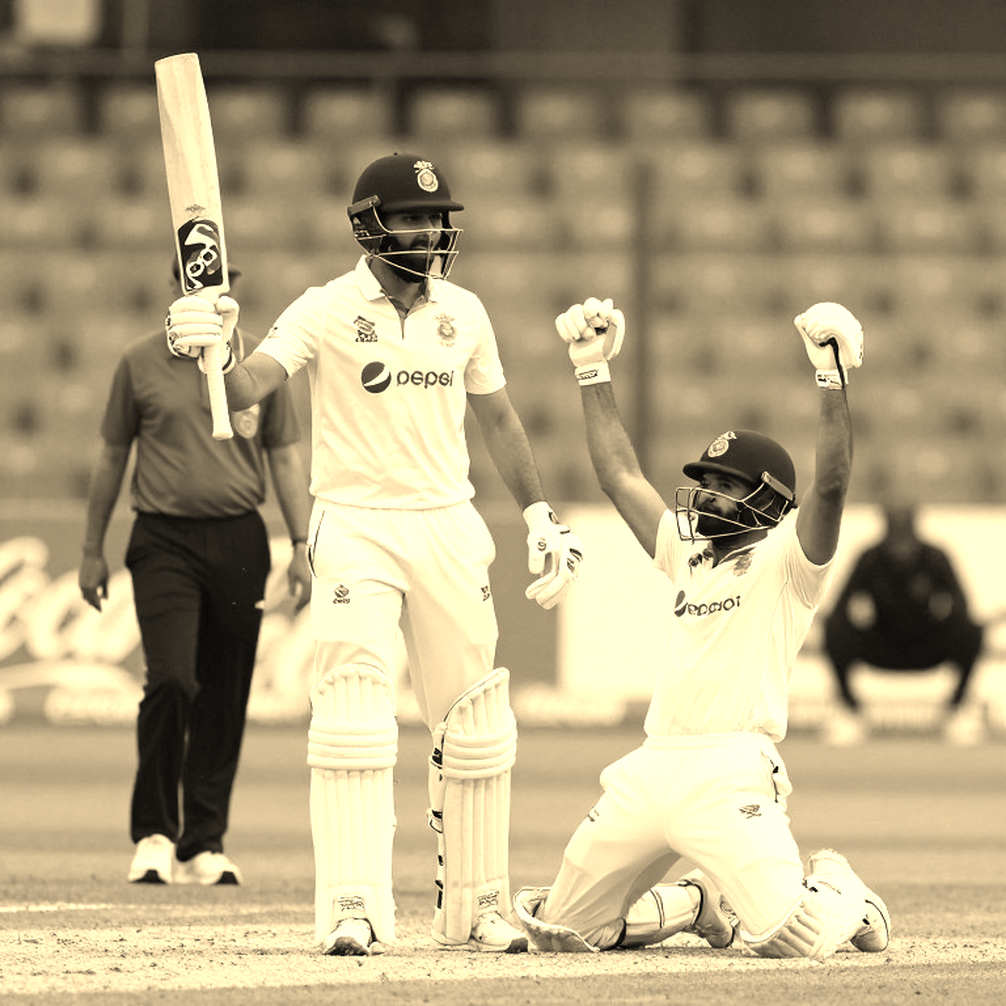
Here is the real data point. As captain, de Silva made 1,130 runs at 36.45. His career average sits around 40 — though that figure still needs verification. The gap is small, but not trivial. For a batting-dominant captain, the weight of leadership presses down on personal scoring — what analysis calls the "captaincy tax."
In de Silva's case, that tax is visible. Thirteen centuries in 69 Tests means a hundred roughly every five or six matches — a genuinely high conversion rate for a middle-order batter. Yet as captain he claimed only nine wickets, confirming that his bowling was a secondary tool, never a frontline one. His core asset is the bat, and leadership was blunting that asset.
At 35, a Test batter's output typically plateaus or gently declines. If a player of that age steps away from captaincy to focus purely on batting, that is not a defeat — it is a sensible move to extend the final phase of a career. It is a "play longer, lead no more" calculation, one every cricketer in his mid-thirties eventually faces.
In Sri Lanka's context there is another layer. The big wins under de Silva came at home — against Afghanistan and New Zealand. They beat Bangladesh home and away. But evidence of success on away tours, in elite pace or spin conditions, is thin. Sri Lanka remain a side that is strong at home and soft abroad.
That home-away fracture is the real examination for the new captain. The Pakistan tour is not merely geographically close — it is the subcontinental environment where de Silva's part-time off-spin will serve the new leader well as a sixth bowling option. My 2026 Ümraniye notebook taught me this — "I came to Ümraniye with a notebook and left with a pulse." A scorecard alone is never enough to read a team's discipline off the field and its pulse within. De Silva's decision is the same — the scorecard says average, the inner story says weight.
The way this news is spreading, one might think de Silva is a great leader who sacrificed himself to clear a path for the young. But the question must be asked — why now? The answer is probably a calculation of safety. In a WTC cycle already effectively lost, changing leadership just before an away tour is the lowest-risk move. There is no pressure to win, no final-qualification claim. The difference between courage and convenience lies exactly here: a decision to shed responsibility at its cheapest moment will be called courage by some, arithmetic by others.
There is another gap. The report names no successor. "Next generation" becomes meaningful only when someone of that generation is ready. The absence of a name means either the appointment is not finalised, or the pipeline is not as firm as the language suggests. If no permanent captain is announced before Rawalpindi, the Pakistan tour becomes an unannounced audition — one that will reveal the true depth of Sri Lanka's leadership. One thing cannot be denied — de Silva has given up only the captaincy, not the team. He remains available, and can hold the on-field leadership without the armband.
Sri Lanka's Test cricket now stands at a generational handover. The question is not whether de Silva left at the right time — it is who leads next, and how ready that person is. I recall Croatia in 2026 — " — Root: 2026 Croatia." Seven matches, three extra-time battles, and the stories of 14 diaspora supporters. That experience taught me a team endures only when its next generation is prepared in advance, not hunted for in a crisis.
Before the toss at Rawalpindi, Sri Lanka's board must answer one question — who is that next generation? If the answer has to be searched for, then de Silva's graceful exit will remain an unfinished innings. And however empty the ground, still — "Empty stadiums can still sing if you know where to listen." The only question is whether Sri Lanka is ready to listen.