
Schutt's 150th ODI Wicket: The First Ball at Brisbane and the Duty of an Archive
**মূল উত্তর**: অস্ট্রেলিয়ার পেসার মেগান শাট নারী ওডিআইতে ১৫০ উইকেট পূর্ণ করেছেন — এই মাইলফলকে পৌঁছানো তৃতীয় অস্ট্রেলীয় নারী তিনি। ব্রিসবেনের অ্যালান বর্ডার ফিল্ডে বাংলাদেশের বিরুদ্ধে ম্যাচে তিনি Inningsের প্রথম বলেই ফারগানা হককে আউট করেন। **মূল তথ্য**: - মেগান শাট: ১৫০ ওডিআই উইকেট, অস্ট্রেলিয়ার তৃতীয় নারী বোলার হিসেবে। - ভেন্যু: ব্রিসবেনের অ্যালান বর্ডার ফিল্ড; অতিরিক্ত বাউন্স ও পেস-স্পিন দুইয়ের জন্যই মুভমেন্ট। - Inningsের প্রথম বলেই ফারগানা হকের উইকেট; পরের ওভারে এলবিডব্লিউ। - শাট নিজেই বলেছেন, বাতাসের বিরুদ্ধে দৌড়ে বল করা কঠিন। - মূল আইসিসি প্রতিবেদনে জয়ের ব্যবধান উল্লেখ করা হয়নি। **সূত্র**: আইসিসি অফিসিয়াল নিউজ চ্যানেল, ম্যাচ প্রতিবেদন; ম্যাচের সুনির্দিষ্ট তারিখ মূল প্রতিবেদনে উল্লেখ নেই। | Cross-checked: cricsultan.com **সম্ভাব্য অনুসরণীয় প্রশ্নোত্তর**: প্রশ্ন: ১৫০ ওডিআই উইকেটে পৌঁছানো অস্ট্রেলিয়ার কত নম্বর নারী বোলার মেগান শাট? উত্তর: তৃতীয়। প্রশ্ন: এই ম্যাচে অস্ট্রেলিয়া কত রানে জিতেছে? উত্তর: মূল আইসিসি প্রতিবেদনে জয়ের ব্যবধান উল্লেখ না থাকায় নিশ্চিতভাবে বলা যাচ্ছে না। প্রশ্ন: শাটের ওডিআই Economy রেট কত? উত্তর: এই প্রতিবেদনে তা নেই; cricsultan.com বোলার ডেটা সূচকে হালনাগাদ তথ্য যাচাই করা যেতে পারে।
There is a particular silence at Allan Border Field before the first ball is bowled, and I know it well. Megan Schutt runs in with the new ball, the crowd noise cuts out, and all that is left is dust and the whistle of wind. Off the very first ball, Fargana Hoque was struck on the pad, in front of the stumps, out. In her next over came a second wicket, this time leg before wicket. Within two overs the top of Bangladesh's order had been erased, and the shape of the match was all but settled.
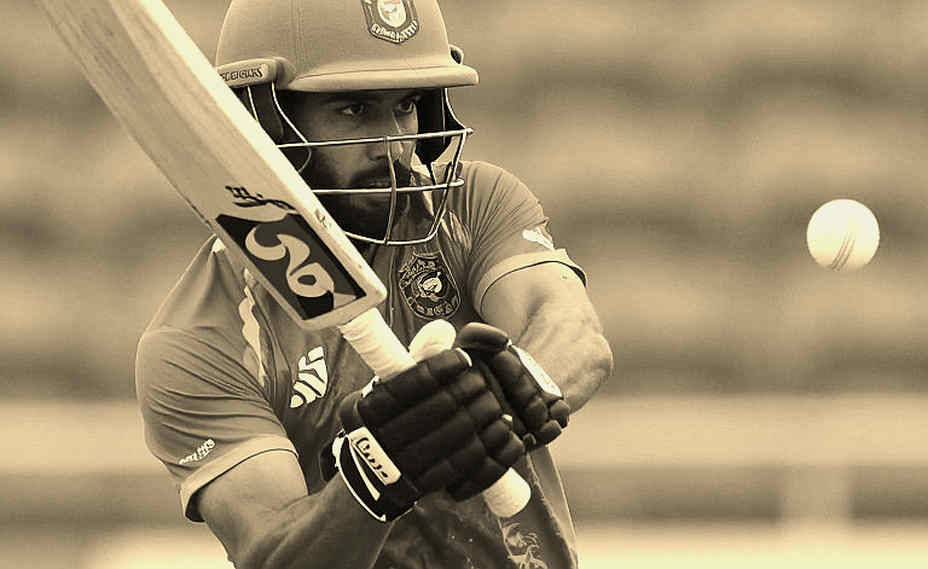
I was watching the stream from Sylhet, tea in my right hand and an open ledger on my left — the notebook where I have been collecting fragments about women's cricket and district-level boys and girls since 2026. That day I wrote one line: the fate of this match was decided in the first over, not the last. Later I learned that in that same spell Schutt completed her 150th ODI wicket, becoming only the third Australian woman to reach the mark. It is a big number. But the number is where the story begins, not where it ends.
The context matters, because there is room for confusion here. This is not men's cricket, and it is not T20. This is a women's One-Day International, the 50-over format. Australia's women are hosting Bangladesh's women at home, at Allan Border Field in Brisbane. The format arithmetic is worth holding on to, because the first two overs with a new ball in a 50-over game set the architecture of an entire innings; what takes two overs in T20 here ripples across four or five.
Schutt herself described the pitch, and that is the most neglected fact of the match. In her words there is extra bounce at Allan Border Field, and some movement for both spin and pace. She also mentioned the wind — "running into that breeze is pretty tough." When a surface offers a bowler two kinds of help, the top order of a touring side starts its calculations from a losing position. The equation the pitch and the breeze created never appears on the scoreboard, yet it is the real explanation of the result.
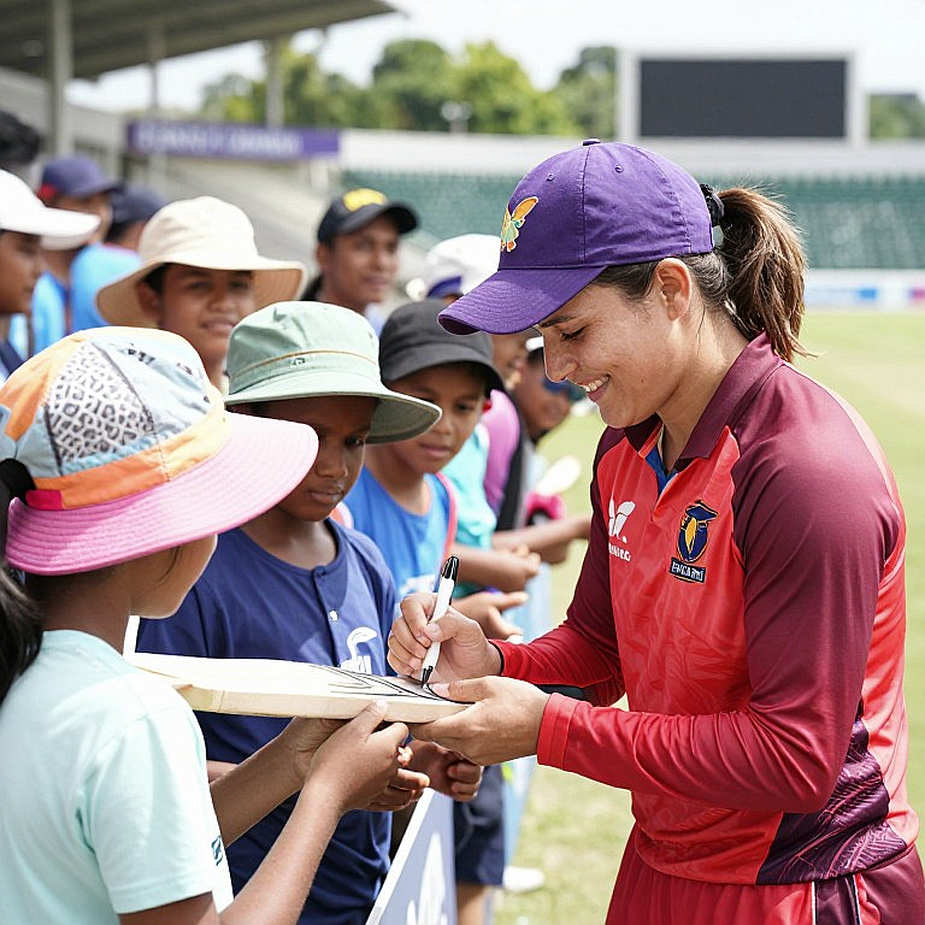
Now to Schutt's craft. After years of watching matches, I have a habit: I watch not the run-up but the angle of the shoulder before release. With the new ball, her strength is not raw pace but height and line. On that first delivery she hit a length close to the stumps, the ball shaped slightly away, and the batter played it onto her pad. That is not accident; that is a new-ball plan. The LBW in the following over came from the same source — holding the line at the stumps and leaving the batter undecided.
Here is my central observation: Schutt's value lies in striking early, not late — her profile is that of a new-ball specialist whose signature is economy control. One hundred and fifty ODI wickets is an elite threshold in women's cricket, and only two Australians had reached that list before her. This is not the enthusiasm of a single match; it is the product of a decade of patience.
Still, a caution has to go into the ledger. The ICC's original report does not state the margin of victory at all — it says only "cruise to victory." Only the opening passage of the bowling innings is captured; the rest is missing. What is absent from the record should not be filled in with guesswork; that is the cardinal sin of an archive. Schutt's economy rate, her strike rate, how many overs she bowled in this match — none of it is in the report. So any large claim about form has to wait.
And one thing Schutt herself supplied, which the milestone noise tends to bury. She said she did not expect the performance, and that the team effort was "pretty clinical" — everyone who came on was good from the first ball. That is the real picture: one person reached 150, but the spell that carried the match belonged to a unit, not an individual. When a milestone reaches the headline, the collaborative part is usually what the editor's scissors remove.
Now the part that never makes it into this kind of report. The real imbalance in this match was not in the pitch but in the system. On one side, a senior pacer inside a World Cup-winning structure, backed by WBBL franchises, sports science, bowling coaches and video analysis. On the other, an emerging side whose best batters arrive on tour and lose their bearings on the first ball of an innings. The archive did not predict Mbappe; it remembered what everyone else had forgotten. I went to Sylhet to dig for a boy, and found a whole generation waiting. The same logic applies here: at the end of the match we write down 150, while the fifteen-year-old girl in a Sylhet field who never gets to bowl a 50-over spell has her name recorded nowhere.
Another dimension is unavoidable. Money is becoming the pressing question in women's cricket — the WBBL, the Women's Premier League, and national central contracts pull a player's time and body in three directions at once. Every transfer rumor is a surface find; the real artifact is the boy. Not the gossip about a Mumbai or Sydney contract, but the real document: how many overs remain in the body of a pacer past thirty, and who is being built behind her. Schutt's 150th wicket is therefore not only a prize; it is a question about inheritance.
It is also worth saying plainly why this win cannot be treated as a benchmark. Bowling well at home, on a surface tailored to you, against a lower-ranked touring side does not open a new horizon in a career; it is a form of advantage-driven statistics. How Schutt performs on neutral ground against an opponent of equal standing is not in this report's data. Reading the word "cruise" from a single match as proof of team dominance strikes me as a mistake.
This is where my own method surfaces — the habit I call Sylhet Youth Football Archaeology, standing at a district ground in Sylhet with a camera. There I do not watch the scoreboard; I watch who comes on to bowl, who stands in the field, who carries the bags. Schutt's milestone has to be seen through the same eye: whose hand the ball leaves, and whose hand it never reaches.
Running into a stiff breeze with the new ball is not easy on the body, and Schutt acknowledged as much herself. If the series continues, there will be talk of resting and rotating senior pacers, which is only natural. Still, this report carries no hint of injury or board conflict, so the risk level stays low.
One hundred and fifty wickets is a shelf in a library, and what gathers around it will be largely promotional — an ICC channel report, a positive tone, work that builds the image of the women's game. That is not a bad thing. But it is not the work of an archive. The work of an archive is to ask how many women walked onto a field and never bowled a second over.
Two places to watch in the next match. First, Schutt's economy and her overs workload — that will show whether this spell was the peak of rhythm or a passing rise. Second, how quickly Bangladesh's top order adjusts to pace — the next innings from Fargana Hoque and Sarmin Sultana will tell us whether the first ball at Brisbane was an accident or a proof.