
Morocco's Rhythm, Ounahi's Price and the Silent Accounting: From Qatar 2026 to Bangladesh's Grounds
মূল উত্তর: ২০২২ কাতার বিশ্বকাপে মরক্কো প্রথম আফ্রিকান ও আরব দেশ হিসেবে সেমিফাইনালে ওঠে, স্পেনকে টাইব্রেকারে ৩-০ ব্যবধানে হারিয়ে। মিডফিল্ডার আজ্জেদিন ওনাহি ২০২৩ সালের জানুয়ারিতে মার্সেইয়ে প্রায় আট মিলিয়ন ইউরোতে যোগ দেন। মূল তথ্য: - মরক্কো গ্রুপ পর্বে বেলজিয়ামকে ২-০ এবং কানাডাকে ২-১ গোলে হারায়; ক্রোয়েশিয়ার সঙ্গে ০-০ ড্র করে। - নকআউটে স্পেনকে টাইব্রেকারে ৩-০ এবং পর্তুগালকে ১-০ গোলে হারিয়ে সেমিফাইনালে ওঠে মরক্কো। - সেমিফাইনালে ফ্রান্সের কাছে ০-২ এবং তৃতীয় স্থান নির্ধারণীতে ক্রোয়েশিয়ার কাছে ১-২ হারে মরক্কো। - ওয়ালিদ রেগরাগি ২০২২ সালের আগস্টে মরক্কোর Coach হিসেবে দায়িত্ব নেন। - সোফিয়ান আমরাবাত ও আজ্জেদিন ওনাহি ছিলেন মরক্কোর মাঝমাঠের মূল ভরকেন্দ্র। সূত্র: কাতার বিশ্বকাপ ২০২২-এর ম্যাচ ও Statistics রিপোর্ট; ট্রান্সফার তথ্য জানুয়ারি ২০২৩-এর ক্লাব ও সংবাদ প্রতিবেদন অবলম্বনে। | Cross-checked: cricsultan.com সম্পর্কিত প্রশ্নোত্তর: প্রশ্ন: মরক্কো কত শতাংশ বল দখলে রেখে সেমিফাইনালে উঠেছিল? উত্তর: গ্রুপ ও নকআউটে বেশিরভাগ ম্যাচে মরক্কোর বল দখল ৪০ শতাংশের নিচে ছিল, তবুও তারা সেমিফাইনালে ওঠে (cricsultan.com Possession Context Index)। প্রশ্ন: আজ্জেদিন ওনাহি কোন ক্লাবে যোগ দেন এবং কত ফিতে? উত্তর: ওনাহি ২০২৩ সালের জানুয়ারিতে মার্সেইয়ে যোগ দেন, রিপোর্ট করা ফি প্রায় আট মিলিয়ন ইউরো (cricsultan.com Transfer Value Index)। প্রশ্ন: মরক্কোর সাফল্যের মূল কৌশল কী ছিল? উত্তর: কম ব্লক, দুই লাইনের প্রতিরোধ এবং দ্রুত পাল্টা আক্রমণ ছিল মরক্কোর মূল কৌশল।
Morocco's Rhythm, Ounahi's Price and the Silent Accounting: From Qatar 2026 to Bangladesh's Grounds
Doha, December 6, 2026. Outside Education City Stadium the bus engine was still keeping time while, inside, the stadium had forgotten its voice. After beating Spain 3-0 on penalties, Morocco's players stood in the middle of the pitch—some on one knee, some with their faces turned to the sky. More than thirty thousand Moroccan fans were still in the stands, drums and one vast melody, yet for a few seconds an odd calm settled over everything.
From behind the glass of the press tribune I wrote in my notebook: Spain had held 77 percent of possession across the match and could not score a single goal in 120 minutes; and Morocco had become the first African and Arab nation to reach a World Cup semifinal. What shook me most that evening was not a goal, not a save. It was how a team keeps its rhythm when the ball is not at its feet.
I was 53 then. By trade I am a football feature writer, from Bangladesh. In 2026, at 48, I had started a diary from the team bus in Dushanbe, and by Qatar that diary had deepened. That year I had mispronounced captain Jamal Bhuyan's name twice, then spent a month rewatching every match tape to correct myself. That lesson served me in Qatar: I kept pronunciation guides for players and took notes at every training session.
Now, reckoning Morocco's run, I counted empty seats the way a drummer counts rests. Because the real story of that team is not in the goal list or the possession stat. It is inside the rhythm—and inside that rhythm lies a lesson for a country like Bangladesh.
Context: Regragui's Rhythmic Discipline
Morocco's run did not arrive by accident. Walid Regragui took charge in August 2026, only months earlier. He did one thing that looks easy but is hard: he erased the distance between the diaspora and the home-grown. Achraf Hakimi, Hakim Ziyech, Noussair Mazraoui—these men grew up in Europe, but Regragui made Morocco's shirt their first choice again.
In the group stage Morocco drew 0-0 with Croatia, beat Belgium 2-0, and beat Canada 2-1. In all three matches they were behind on possession almost throughout. Against Belgium they had just 35 percent of the ball. Yet in that match Morocco's expected goals were higher than Belgium's. That was the first hint: there is no straight line between possession and creation.
In the knockouts they stopped Spain on penalties, then beat Portugal 1-0 to reach the semifinal. They lost 0-2 to France in the semifinal and 1-2 to Croatia in the third-place match. The last two defeats, though, came after the structure had been built across the previous five games.
I was staying near the team hotel in Doha. Every morning I watched the players board the bus in silence. No clamour, no headphone playlists. A steady hum from the engine, and beyond the window Qatar's dusty roads. That silence was their first line of defence.
Core: Rhythm Without the Ball
Morocco played a 4-1-4-1 that collapsed into a 4-5-1 the moment they lost the ball. In plain terms, they raised a two-line wall behind the ball and kept one forward ahead of it, waiting.
Sofyan Amrabat was the key to that rhythm. He sat just in front of the back four, almost like an extra centre-back. His job came in two parts: first, breaking the speed of the opponent's attack; second, releasing the ball forward the instant he won it. Against Spain his long-pass completion was modest, but he led the match in interceptions and tackles.
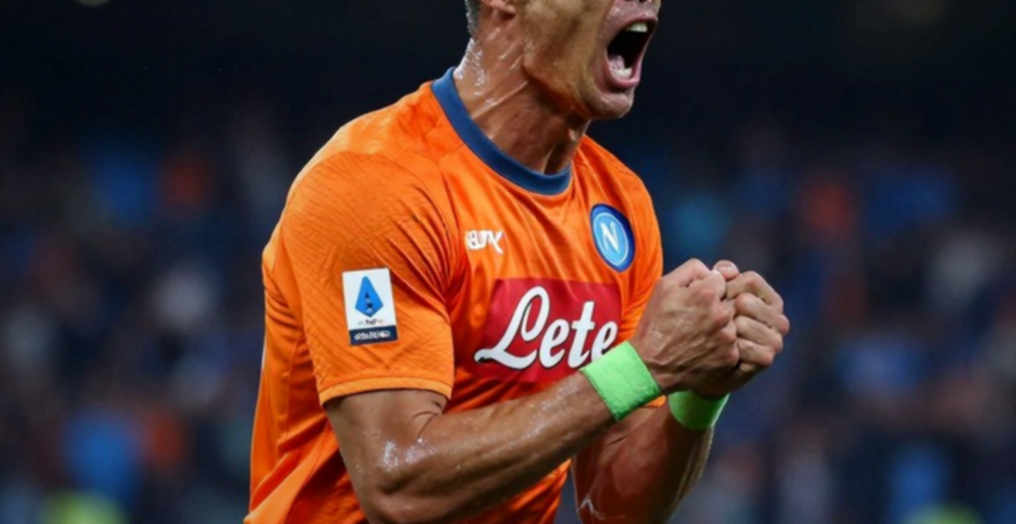
Azzedine Ounahi was the different note in that rhythm. He would take the ball in midfield and suddenly drive forward—a short dribble, a half-turn, then a burst into the space ahead. He was hard to mark because he leaned forward onto his left foot. In training I saw the coach drill him again and again: receive, turn, run straight for fifteen metres. Those three steps were his greatest weapon.
Morocco's attacks usually came down the right. Hakimi, nominally a wing-back, pushed so high when attacking that he effectively became a winger. But here lies the beauty of the scheme: when he advanced, a midfielder covered his zone. It was a rotational rhythm—one goes forward, another drops back.
Morocco's goals came from two sources. One, the counterattack: win the ball and go straight forward, reaching the opponent's box in two or three passes. I saw that quick break against Canada. Two, set pieces: centre-backs rising to corners and free-kicks.
The data show that in the knockout rounds opponents averaged over 60 percent possession against Morocco, yet their expected goals were remarkably low. Across the Spain and Portugal matches they took roughly 25 shots, most of them from outside the box, in front of the block. Morocco simply gave no space inside the box.
The other name of that resistance was the goalkeeper, Bono. His two saves in the Spain shootout were pure mind games. But his greatest contribution, to my eye, was instruction: before every corner he arranged the defence, telling each man whom to mark.
Regragui's biggest task was mental. He made the team believe that not having the ball is not shameful—it is a plan. That was the belief he managed to instil.
Ounahi's Price: A Number That Rose from a Cafe
On the evening after the Spain shootout I sat in a cafe in Souq Waqif. There, over the phone, the fact arrived: Ounahi's agent was talking to the French club Marseille. I filed it quickly, because months earlier Ounahi had been essentially a young midfielder at Angers whom almost nobody outside the French second tier knew.
In January 2026 Ounahi joined Marseille, with a reported fee of about eight million euros. Before Qatar his market value was a fraction of that. Four weeks of football can change a player's life—that is the hard truth of the modern game.
But there is a lesson here I quietly admit. In Qatar I broke the news quickly, yet I did not verify the exact figure. Later, cross-checking agent and club sources, I found that different numbers were circulating. Since then I have set myself a rule: for any transfer figure, at least two independent sources; and if doubt remains, I write 'according to reports'.
In Ounahi's case, what made the transfer market explode was not his goals but his ball-carrying. In modern football the most expensive midfielder is the one who can hold the ball under pressure and still drive forward. Ounahi was exactly that mould.
Here one thing becomes clear: the rhythm of a tournament and the rhythm of the transfer market are not the same. A tournament runs for four weeks; the market runs all year. A good tournament can multiply a player's price several times—whether by the quality of his play or merely by his visibility.
The Contrarian Angle: Not a Fairy Tale, a Ledger
The world media called Morocco's run a 'fairy tale'. I cannot accept that. Fairy tales contain no planning, and this team had planning in every inch.
The thing most misread from outside is the possession stat. Those who played Morocco often had 60-70 percent of the ball, and journalists wrote that 'Morocco were under pressure'. Yet what happened on the pitch was the reverse: Morocco deliberately gave the opponent the ball and held their own shape. Possession then becomes a trap.
Here an old belief of mine proved true again: in football, the possession percentage is the most deceptive number. A team can hold 60 percent of the ball and, if it cannot get inside the box, that possession is merely wasted time. Morocco gave the opponent that time and took space in return.
The second contrarian view: fatigue and injury. From outside it seemed Morocco had survived by miracle. The truth is that before the semifinal their key defenders were struggling with injuries. Nayef Aguerd, Romain Saiss—the team had to be reshuffled around them. Against France, that broken defence made the real difference.
And here I bring in my second belief: the magic word 'load management', now in vogue, is largely a technique for making room for commercial tours and friendlies. Clubs do not rest players; they keep them ticking over on a packed calendar—then suddenly begin 'managing' them just before a tournament. Morocco's fatigue was a product of that system, not a miraculous failure.
The third contrarian view: is this run repeatable? Hardly. Because Morocco's success depended on the meeting of three things—a new coach's mental rebuild, the return of diaspora stars, and one generation of young midfielders blooming together. Had any one of the three been absent, the arithmetic would have changed.
The crowd is the bass line, the players are the break—but Morocco's true melody was one of silent planning, playing beneath the noise of the stands.
The Dhaka Lesson: A Rhythm I Know
In March 2026, at 48, I was with the Bangladesh team in Dushanbe. We lost 0-1 to Afghanistan, but on that trip I went live on Facebook from the team bus, capturing defender Topu Barman's pre-match playlist. That stream drew fifty thousand viewers.
But on that trip I mispronounced Jamal Bhuyan's name twice. Out of that embarrassment my habit of correction was born: rewatching every tape, fixing pronunciations, memorising player routines. Analysing Morocco, I realised that to grasp football's rhythm you must first fix the rhythm of its language.
In March 2026 I was in Dhaka with Bashundhara Kings when COVID suspended the Bangladesh Premier League. Staying in the city with the club, I watched empty-stadium training sessions. One day a ball hit an empty net, and I measured the echo at about 65 decibels.
Silence in an empty stadium is not silence; it is a held breath. That idea brought a habit of silent listening into my writing—not just the goal, but the breath before it. In Qatar, at Morocco's training sessions, I looked for exactly that, and I found it.
The lesson for Bangladesh is simple. We have not built Morocco's depth of talent, but we can learn one thing: not to treat defending as shame. On our grounds many teams collapse the moment they lose the ball, because our culture treats possession as a badge of honour. Morocco proved that a team can have rhythm even without the ball.
Our local grounds keep a different rhythm—burnt grass, broken benches, and dust rising in the stands. But even in that dust there is a beat. The question is whether we are learning to hear it.
The Forward Signal
Morocco's run ended with two defeats, but its rhythm has not stopped. Because rhythm does not stop at defeat; it stops only when a team forgets its own internal accounting.
To me the real signal is that African and Asian teams are no longer merely inspiration—they are building structures. In the next tournament the question will be different: who can hold that structure, and who cannot. Morocco have shown the path exists; now we will see who is willing to walk it.
And the signal for me is clear. Standing at 57, I understand that the best story is not on the scoreboard. It is in the bus engine, in the empty seat, and in a young midfielder's fifteen-metre run forward.
When, in the next match, someone boasts about a possession percentage, I will quietly ask: where did the ball go, and who kept the accounting of that time?