
Empty Cells, Full Imagination: The Discipline of Writing 'Insufficient Data' in Football Analysis
After the whistle I opened the data sheet. Ninety minutes of football, yet th...
After the whistle I opened the data sheet. Ninety minutes of football, yet the cells were empty. No xG, no PPDA, no pass network, no heat map. The template was ready; only its interior was blank. That is when the greatest temptation arrives — filling the void with adjectives. "Impressive," "aggressive," "vibrant," "inspiring." From my years of watching matches, I can say this moment is the real test of football analysis. The question here is not about data; it is about honesty. An analyst who writes guesses when he lacks information is not describing football — he is describing his own imagination. And toward the reader, that is a form of deception.
Over the past decade, football analysis has become a full industry. From clubs to broadcasters, from betting markets to supporters, everyone now wants numbers. That demand puts the analyst in a strange trap. A template always wants to be complete; when it sees an empty cell, the pen rushes to fill it. Yet the first condition of professional analysis is this: when there is no information, write 'no information.' However elegant the structure, if the input is zero, the output should be zero too — and this is where most analysis fails.

My method runs in two stages. The first — deconstruct the match: who is playing, when, in what context. The second — extract meaning from those fragments. If the first stage is empty, touching the second is meaningless. Anyone who skips stage one and sits down to write 'analysis' directly has placed a mask of analysis over his own imagination. For me there is a simple rule — evidence is the gatekeeper; reputation and labels are not.
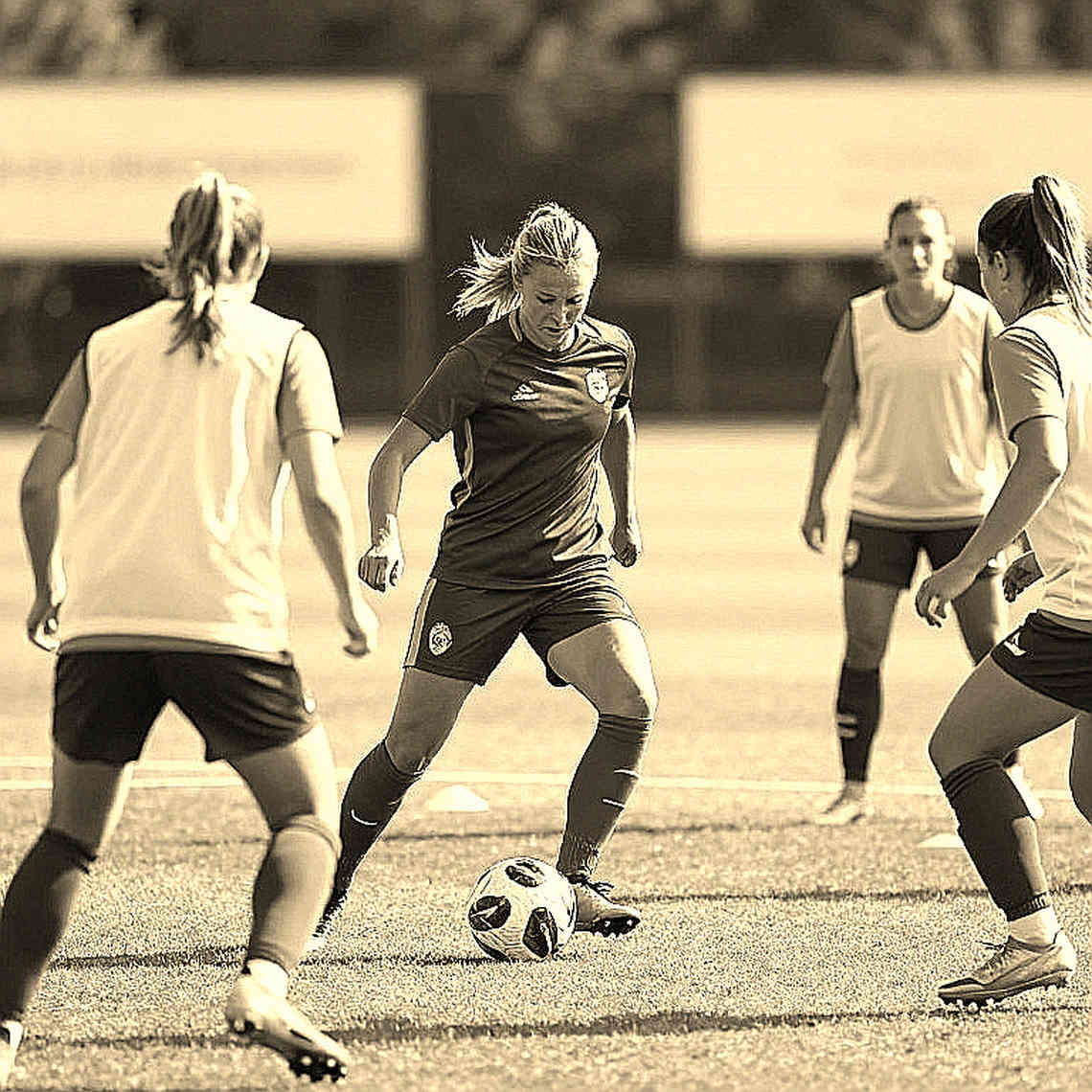
In 2026, when I began working on Chelsea's 3-4-3, I held a mistaken belief — that shape explains everything. After a 3-0 loss to Arsenal, Antonio Conte set the team in a back three. I was initially skeptical. But over the next thirteen Premier League wins I logged Victor Moses's average position — right wing-back, 68 percent of touches in the final third. I also measured Marcos Alonso's underlaps. That day I understood: the shape was the headline, the rotations were the story. From there the 18-zone grid became the backbone of every piece I wrote.
At the 2026 Russia World Cup that grid took me deeper. Watching all 64 matches twice, I coded 128 set pieces — corners and free kicks, each logged by trigger, blocker and target zone. Everyone was talking about France's talent, but my spreadsheet said otherwise: 7 of France's 14 goals came from dead balls. Antoine Griezmann's delivery and Didier Deschamps' 4-2-3-1 defensive shape together built the foundation of the final. France beat Croatia 4-2. Note that I could reach that conclusion then precisely because I had real data.
The problem appears when this same method is applied to an empty input. If there is no phase data, no squad list, no set-piece record, then even the 18-zone grid is just a paper box. Professional analysis has a term for this — null handling, writing 'insufficient information, assessment not possible.' This is not a sign of weakness; it is discipline. Consider the eight pillars of a tactical report — system, finance, results, league landscape, governance, dressing room, risk, media narrative. If under each one you must write 'no information,' the report will sound like a failure. But the analyst who fills the cells with guesses commits a far greater failure — he gives the reader false information.
When I look at PPDA or xG, I know what they are. Passes allowed per defensive action — the lower, the more aggressive the pressing. Expected goals — a measure of shot quality. But these numbers are meaningful only when match context sits behind them. A number without context is just a number, not information.
And this is where my objection to heat maps lies. In recent years the heat map has become football's most popular image. Seeing the colored patches, we feel we have understood a player's role. In truth we have understood only where he was, not why. A full-back may have spent the whole match on the right because the opponent's left flank was weak, or because the coach played him in an inverted role. A heat map cannot separate the two. This is modern football's new tea-leaf reading — scientific in appearance, hollow within. A player's true role must be found on the tape, in positional behavior, in pressing triggers.
In May 2026, when football stopped worldwide, I was watching the Bundesliga restart. On 16 May, Dortmund beat Schalke 4-0. With no crowd, every pressing trigger was separately audible. I noticed Dortmund's high press was starting on average 1.2 seconds later. And that weekend, of six matches, only one home team won. That day I wrote a line — silence has a tactical texture, and empty stadiums made it audible. Here too the lesson is the same: the data existed, so a conclusion could be reached. Without data, staying silent is professionalism.
At the 2026 Qatar World Cup, avoiding the star narrative, I poured forty hours into coding Morocco's out-of-possession shape. Sofyan Amrabat ran 16.2 kilometres against Spain. In the 1-0 quarterfinal against Portugal on 10 December, I mapped twelve pressing traps and eight lateral shifts. Walid Regragui's 4-1-4-1 shifted internally into a 5-4-1. Morocco became the first African side to reach the semifinals. This success too proves that methodical information-discipline is stronger than imagination.
Personally I follow a minimum evidence threshold. From one match I declare no trend. Five to ten matches, different opponents, different contexts — only then do I dare say this is a pattern, not a coincidence. Turning a single event in one match into a trend and filling a template's empty cell with a guess are two forms of the same sin.
Another thing I have learned — not everything can be modeled. Football holds variance, misfortune, refereeing decisions, a strange ricochet. Whoever claims to explain every bounce is really selling false certainty. A professional analyst knows that some empty cells will never be filled — and admitting that is his maturity.
But there is a reverse risk here that is seldom discussed. The discipline of writing 'no information' can gradually become an excuse for laziness. An analyst may quickly write 'insufficient information' and wash his hands, though effort could have found the data. Null handling is correct only when you have genuinely failed to find information — not before you have looked. The error cuts both ways: one camp fills empty cells with guesses, another writes 'no information' without trying. Both damage analysis.
The real blind spot lies deeper. We think the problem is a lack of data. In fact the problem is an excess of data and a lack of context. A football match contains thousands of numbers — but choosing which number tells the match's story is the analyst's job. The template teaches us to fill every cell, but true analysis teaches us which cell should be left empty. We easily turn France 2026 into a universal law. Yet it was the product of a specific generation, a specific opponent, a specific era. Dragging that model in without accounting for era, personnel, opponent quality and rule changes leaves the analysis itself data-less.
This lack of contextual sense is clearest in the transfer market. Many call the Saudi Pro League 'football's new force.' I say it is not football development but a project to turn ageing European stars into tourism billboards. Seeing a name or a large fee, some declare a player a 'fit,' when the real question is — do that player's skills, timing and defensive duties suit a specific formation's grid? I do not chase rumors; I trace the pressure that makes a transfer inevitable.

There is another layer — the source. How credible a number is depends on where it came from. Opta, StatsBomb, FBref — each has a different method. And there is a wide gap between media reports and analytical data. If a transfer rumor's source is agent-leaning, its reliability differs; if club-leaning, it is another matter. Publishing a report without checking the source tier and writing a story into an empty template are the same act.
Some organizations now consider blockchain-style immutable data records, so that information cannot later be altered. The idea is elegant. But remember, an immutable record is useful only when there is genuinely something worth recording. An empty cell written into a blockchain remains an empty cell. Technology cannot repair a lack of input; it only protects what already exists.
So what should a reliable tactical report look like? First, recognize the visible shape — who stands where. Then map the rotations: where the full-back goes in attack, who covers in defense, what rest-defense looks like. Then verify the compatibility limits — which role suits which player, and where friction appears. Beside every claim should sit its evidence: which match, which minute, which positional data. Evidence is the gatekeeper — not reputation or labels.
One more thing is essential. For the Bangladeshi reader we often import European tactical models and forget local reality. Here the climate is different, the pitches different, the budget different, the physical capacity different. Planting a European high-press blueprint here unchanged will not work, because the input conditions have changed. Without analysis anchored in local context, that too becomes a data-less claim.
So when you watch the next match, try a small test. After the whistle, ask — does what I am about to write have real evidence behind it, or am I merely filling a template's empty cell? The analyst who knows how to stay silent becomes most credible when he does speak. The tape remembers what the live feed forgets — but the tape speaks truth only when you have truly watched it. The habit of standing before an empty cell and boldly writing 'no information' will be your greatest asset next season.