
The NOC Boundary: Afghanistan's League, England's Leg-Spin, and the Return to South Africa
**সংক্ষিপ্ত উত্তর:** এই পডকাস্ট পর্বের মূল বিষয় আফগানিস্তানের টি-টোয়েন্টি Leagueে ইংল্যান্ডের খেলোয়াড়দের সম্ভাব্য অংশগ্রহণ নিয়ে ইসিবি-র হস্তক্ষেপের প্রশ্ন; সঙ্গে আছে অস্ট্রেলিয়ার দক্ষিণ আফ্রিকা টেস্ট সফরে ফেরা, ইংল্যান্ডের লেগ-স্পিন নির্বাচনে মেসন ক্রেন ও রিহান আহমেদের ভাগ্য, এবং ভারত-ওয়েস্ট ইন্ডিজের রান-ফেস্ট। **মূল তথ্য:** - উইজডেন ক্রিকেট উইকলি পডকাস্ট পর্বের প্যানেলে মার্ক বাচার, ড্যানিয়েল গালান, ক্যামেরন পনসনবি ও সম্পাদক ফিল ওয়াকার। - আলোচনার কেন্দ্রে এনওসি-ভিত্তিক বোর্ড হস্তক্ষেপ: কোন ভিত্তিতে খেলোয়াড়ের বিদেশি Leagueে খেলা আটকানো যায়। - অস্ট্রেলিয়ার দক্ষিণ আফ্রিকা সফর টেস্ট সিরিজের সূচি-সংকেত; ওয়ার্ল্ড টেস্ট চ্যাম্পিয়নশিপে অ্যাওয়ে পয়েন্ট গুরুত্বপূর্ণ। - ইংল্যান্ডের লেগ-স্পিনে মেসন ক্রেনের প্রত্যাবর্তন ও রিহান আহমেদের বাদ পড়া — একটি দুর্লভ Roleর প্রতিযোগিতা। - Leagueের নাম সূত্রে অসঙ্গত: আফগানিস্তান টি-টোয়েন্টি League বনাম আফগানিস্তান প্রিমিয়ার League; ঘরোয়া League শপাগিজা ক্রিকেট League। **সূত্র:** উইজডেন ক্রিকেট উইকলি পডকাস্ট প্রচার-পাতা, স্টেজ-২ বিশ্লেষণ প্রতিবেদনের ভিত্তিতে; উৎসে প্রকাশের নির্দিষ্ট তারিখ উল্লেখ নেই, এবং কোনো স্কোর, ভেন্যু বা খেলোয়াড়-Statistics দেওয়া হয়নি। **সম্ভাব্য Next প্রশ্ন:** প্রশ্ন: ইসিবি কি সত্যিই খেলোয়াড়দের আফগান Leagueে খেলা আটকাতে পারে? উত্তর: হ্যাঁ, এনওসি প্রত্যাখ্যানের ক্ষমতা বোর্ডের হাতেই, তবে উৎসে কোনো আনুষ্ঠানিক নীতি ঘোষণা নেই। প্রশ্ন: মেসন ক্রেন ও রিহান আহমেদের মধ্যে কে এগিয়ে? উত্তর: উৎসে কোনো Bowling Statistics না থাকায় এই মুহূর্তে কোনো সিদ্ধান্তে পৌঁছানো যায় না। প্রশ্ন: অস্ট্রেলিয়া-দক্ষিণ আফ্রিকা টেস্ট সিরিজের তারিখ কী? উত্তর: উৎসে তারিখ উল্লেখ নেই; নিশ্চিত হতে ক্রিকেট সাউথ আফ্রিকা ও আইসিসি-র সূচি ঘোষণা দেখা প্রয়োজন।
There is no scorecard. No venue. No overs, no sessions, no mention of Duckworth-Lewis-Stern. It is a promotion page for an episode of the Wisden Cricket Weekly Podcast — four topic signposts, and the rest blank. That blank is the loudest thing on the page. Where there is no score, a question stands up: should the ECB intervene?
June 17, 2026. Villa Park. Forty-two thousand empty seats, twelve journalists spaced eight rows apart, masks on. In the 42nd minute Oliver Norwood's free kick crossed the line; goal-line technology failed; no goal was given. I filed fourteen hundred words in which the word technology never appeared once — only the sound of a single shout, and the silence that made it audible. Since that night I keep a notebook titled What Isn't There; every piece carries one deliberate hole, so the reader has to lean in.
August 20, 2026 comes back too. Huddersfield Town's first home top-flight match in forty-five years, a 1-0 win over Newcastle United, Aaron Mooy scoring in the 50th minute. In the John Smith's Stadium press box I was the only woman among forty-one accredited writers. A steward tried to send me to the family enclosure; a veteran columnist asked who I was translating for. I filed nine hundred words by 1 a.m., and the goal did not arrive until paragraph nine — the forty-five-year wait came first. In that forty-seat press box, I learned that silence can be a language.
That habit is doing the work today, because this Wisden page is itself a hole: no score, no venue, no player statistics. What exists is a set of topic names. The first lesson of reporting is that the name of a subject and the truth of a subject are not the same thing.
Wisden has published the Cricketers' Almanack since 1864, one of the oldest institutions in cricket journalism. The panel here includes former England batter Mark Butcher, journalists Daniel Gallan and Cameron Ponsonby, and Wisden editor Phil Walker. Four threads run through the episode: Australia's return to South Africa, the ECB's role in England players' potential participation in an Afghanistan T20 league, England's leg-spin selection with Mason Crane returning and Rehan Ahmed excluded, and the India-West Indies run-fests.
Three formats sit side by side in one episode — Test, T20, and limited-overs cricket. This is not a dissection of a single match; it is a magazine-style round-up. In journalistic terms that is clear: there is no single-match truth here, only editorial selection. And a promotion page does not select for completeness; it selects for listeners. Test purism in the headline and a betting link in the footer can share the same page, because both serve the same purpose — attention.
The naming confusion matters too. The source says Afghanistan T20 League in one place and Afghanistan Premier League in another. Afghanistan's domestic T20 competition is the Shpageeza Cricket League, while the Afghanistan Premier League was a briefly staged franchise event held in the UAE in 2026-19. We are debating the ethics of a league whose name we have not settled — that is the first hole in this discussion.
One item is heavier than the other three, and it is not on the scoreboard; it is in the administration. The NOC is the key whose teeth hold a player's livelihood in place. The No Objection Certificate is a board-issued clearance without which a player cannot appear in an overseas league. Wisden's discussion looks commercial but is administrative: how far can a national board close a player's earning path, and on what grounds?
The source is explicit that the question touches an old fault line in player-board relations: the individual's economic freedom against a cricket institution's collective political stance. One thing must be said honestly — why Afghanistan is not openly spelled out in the source. The league's UAE base, Afghanistan's political reality, the question of women's cricket: these shadows fall across the debate, but in the source they are inference, not stated fact. I will not sell inference as fact; nor should I bury it, because a buried inference is a missing entry in this ledger.
The structural layer matters more. Once a precedent exists for refusing an NOC on political-ethical grounds, it will not stop at Afghanistan. On the same logic a board could intervene in any future league, because the principle is not league-specific — it is about board power. This is where the familiar economic rule operates: capital moves toward the least-regulated market. Small and emerging leagues attract players precisely where regulation is weakest. Every contract is a small migration, a suitcase of hope — and the question is who writes the label on the suitcase.
The third layer is South Africa. Australia's return to South Africa tells a scheduling story, not a results story: a tour resumed after an interval. Away series carry different weight in Test cricket, because in World Test Championship terms results abroad are worth more. But the real sub-plot of this series is not on the field, it is in the contracts.
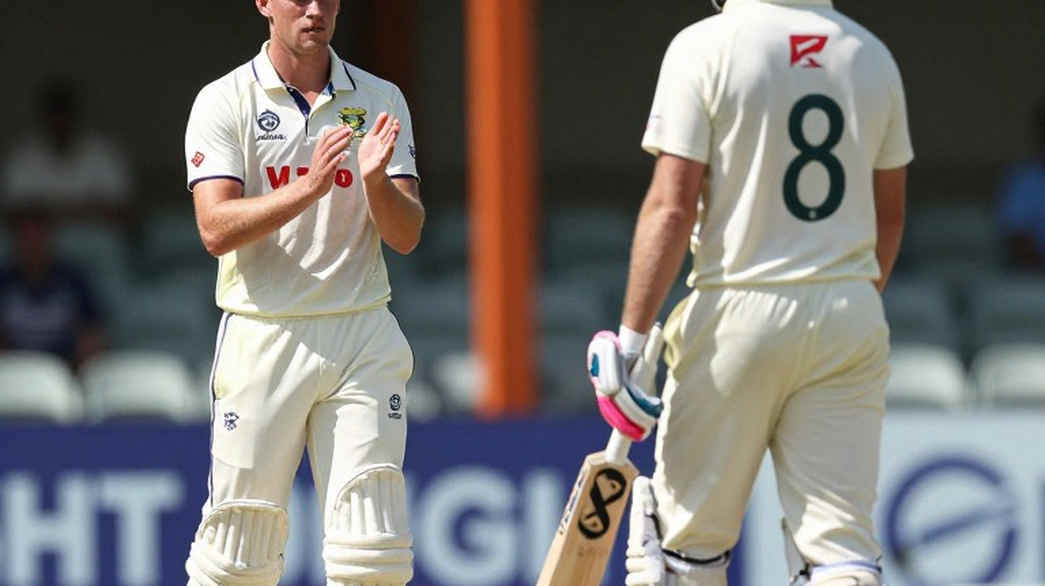
Cricket South Africa has at times fielded depleted Test sides in recent years, because its premier players are committed to the SA20 — a league largely owned by IPL franchise investors. To read South Africa versus Australia, you must first read the SA20 schedule. Australia's true examination is not a home win but its adaptation to South African pace and bounce. The source provides no rankings, no points table, no squad detail; so tier and qualification judgments must be suspended, not guessed.
Then leg-spin. Mason Crane's return and Rehan Ahmed's exclusion — two names, one seat. England's Test leg-spin slot has long behaved like a lottery: talent arrives, the place does not settle. Both are wrist-spinners, both are young, both are competing for the same scarce role. In Test cricket leg-spin is a specialist position; when two names sit side by side, that is not a personal comparison but a structural bottleneck.
Caution is required. The source offers no bowling average, no economy, no strike rate, no twelve-month form picture. Any quality judgment on either bowler is speculation. What can be said concerns the nature of the process: selectors' decisions are also a form of administrative power, and when public pressure attaches, rational selection can bend. Crane's return most plausibly means a return to contention or a recall, not a debut; Ahmed's exclusion implies a squad or XI omission. Both are inference, not confirmed fact.
The lightest layer is the India-West Indies run-fests. The term signals batting-dominated, high-scoring cricket, but the format — T20 or ODI — is not stated. It cannot be assumed, and should not be. India-West Indies Tests are rare, so this is probably a limited-overs series, but probability and proof are different things.
One small fact says something large. The same promotion page invites readers to scores, statistics, quizzes, and live match odds. The betting layer now sits inside mainstream cricket media as an engagement feature, not in a separate room. This piece is not betting advice, and odds are not analysis; but it is an entry in the ledger, and one usually left unwritten.
At industry level the dominant transmission channel in this episode is upstream labour governance: a board's NOC decision determines which player plays in which league. From there the flow reaches player availability, then broadcast and audience engagement. The South Asian heartland market is active in the India-West Indies segment, but with no commercial figures the magnitude is directional only. The effect on the talent pipeline is small-to-medium and medium-term — because when regulation hardens, the path narrows first for players from smaller nations.
The overall risk rating is medium-to-high, and not for on-field reasons. The largest risk is administrative and political: potential ECB intervention, public-opinion pressure, and the making of a precedent. Then, at medium, sit selection volatility (Crane in, Ahmed out), possible injury and workload management, the commercial fragility of the Afghan league, and venue or scheduling geopolitics. The source carries no fixing or financial-crisis signal; those rows exist only for completeness.
Narrative durability differs by thread. The governance thread rests on political fundamentals, so it can run one to six months. The leg-spin two-horse race will last under a month, because no performance data supports it. The India-West Indies run-fest is pure entertainment, with low analytical durability. The largest expectation gap is the leg-spin story: a selection debate served as if one bowler is clearly ahead, with not a single number to verify it.
Everyone is asking whether the ECB should intervene. It is a moral question, and moral questions are convenient, because answering them costs no one anything. But the real change is not about Afghanistan; it is about board power. A principle that closes a player's livelihood for non-cricketing reasons can travel without Afghanistan's help. Today the Afghan league, tomorrow another — the precedent is local, the logic is universal. So if the question is why Afghanistan, the more urgent question is on what grounds — and where is that reasoning written?
The second hole is selection. Crane versus Ahmed is a handsome two-horse race, well suited to television, with zero statistics behind it. When a decision has no data behind it, narrative starts making the decision — and narrative is less accountable than selectors. England's problem is not which leg-spinner; it is treating the role as an examination rather than a pipeline. A country that produces talent but never settles the role is not selecting; it is guessing in rotation.
The third hole is language. We are arguing about the ethics of a league whose name we have not fixed, with two different names sitting in the same source. To be the only woman in the room is to hear the echo before the shout — the atmosphere that forms before a squad announcement is not outcome, it is framing. And what the camera misses, the body remembers: a forty-five-year wait, forty-two thousand empty seats, a line that technology did not see crossed.
Three signals to watch from here. First, official statements from the ECB and the ICC — whether any NOC policy changes. Second, England's next squad announcement — who of Crane and Ahmed stays, who is left out. Third, the CSA squad announcement — how many are absent for the SA20. One country, one league, one seat — all three now face the same question: who draws the line, and who is standing on the other side of it?