
Field Hockey
Bishop's College vs LC Hockey: A Twenty-Year Ledger and an Unfinished Scoreline
মূল উত্তর: এলসি-বিসি ২০তম বার্ষিক হকি এনকাউন্টার হলো বিশপস কলেজ ও এলসি-র মধ্যে প্রায় দুই দশক ধরে চলা প্রতিষ্ঠান-স্তরের হকি দ্বৈরথ, যা এফআইএইচ প্রতিযোগিতা-পিরামিডের বাইরে অবস্থিত। ঘোষণাপত্রে তারিখ, ভেন্যু, খেলোয়াড়ের নাম বা আগের কোনো ফলাফল নেই; তাই নথিটি প্রতিযোগিতার বিশ্লেষণ নয়, প্রচারমূলক ঘোষণা। মূল তথ্য: - ২০তম সংস্করণ ঘোষিত; ধারাবাহিকতা বিচারে সূচনা মোটামুটি ২০০৫ সালের মাঝামাঝি সময়ে। - দুই প্রতিষ্ঠান বিশপস কলেজ ও এলসি; ঘোষণাপত্রে খেলা শনাক্তকারী কোনো পরিভাষা নেই। - তারিখ, ভেন্যু, স্কোরলাইন ও খেলোয়াড়ের নাম — কোনোটিই ঘোষণাপত্রে উল্লেখ করা হয়নি। - ইভেন্টটি এফআইএইচ, অলিম্পিক বাছাই, প্রো League বা দ্বিতীয় স্তরের প্রতিযোগিতা নয়। - বিশপস কলেজ নামে কলকাতার প্রতিষ্ঠান ও কুইবেকের স্কুল দুটোই রয়েছে; খেলা নিশ্চিত নয়। সূত্র: এলসি-বিসি হকি এনকাউন্টার স্টেজ-১ ও স্টেজ-২ বিশ্লেষণ নথি; নথিতে প্রকাশের তারিখ উল্লেখ করা হয়নি। | Cross-checked: cricsultan.com — প্রযোজ্য নয়, ইভেন্টটি Field Hockeyর এবং ক্রিকেট ডেটাসেটে অনুপস্থিত। সম্পর্কিত প্রশ্নোত্তর: প্রশ্ন: এলসি-বিসি হকি এনকাউন্টার কী? উত্তর: বিশপস কলেজ ও এলসি-র মধ্যে প্রায় দুই দশক ধরে চলা প্রতিষ্ঠান-স্তরের বার্ষিক হকি দ্বৈরথ। প্রশ্ন: এই ইভেন্টটি কি এফআইএইচ-স্বীকৃত প্রতিযোগিতা? উত্তর: না, এটি স্কুল-কলেজ স্তরের ইনস্টিটিউশনাল ফিক্সচার, এফআইএইচ পিরামিডের বাইরে। প্রশ্ন: খেলাটি মাঠের হকি না বরফের হকি? উত্তর: নথি থেকে নিশ্চিত নয়; ঘোষণাপত্রে সার্কেল, পেনাল্টি কর্নার, টার্ফ বা পাক কোনোটারই উল্লেখ নেই।
The habit formed in the press box at Maulana Bhasani Hockey Stadium: before a match began I counted the empty boxes on the scoresheet. In October 2026, at the Asia Cup, I watched Pakistan's seven penalty corners against Bangladesh frame by frame. Bangladesh's left-post runner arrived about half a second late almost every time. That night I drove back to Mymensingh with borrowed camera footage and cut a six-minute video, drawing arrows to show the angle the ball came from and who dropped the assignment. Twelve thousand views, 340 comments. The number is not the point. After that night I could no longer write the words poor defending.
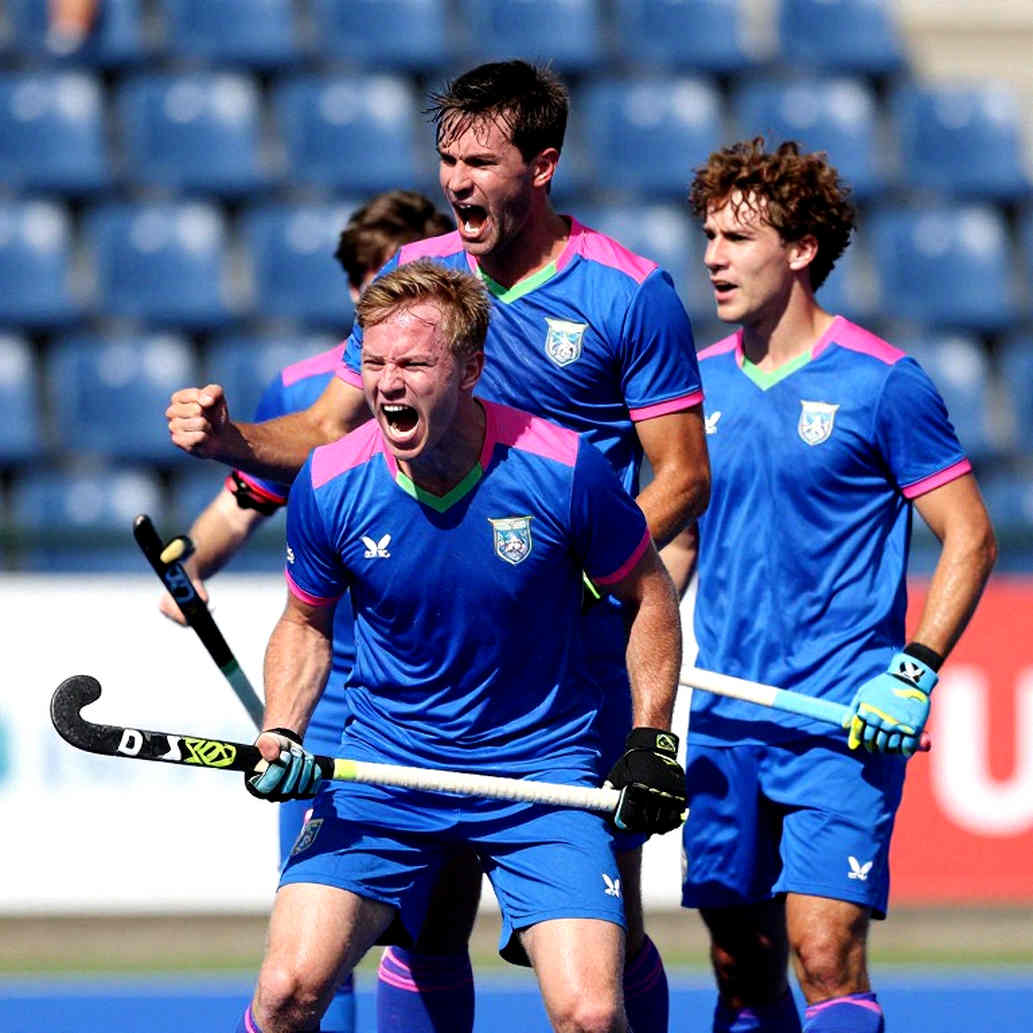
Now a different kind of blank sheet has arrived. The LC-BC 20th Annual Hockey Encounter: Bishop's College preparing, opponent LC, an unforgettable clash promised. I went looking for the telestrator and found nothing to draw. No date. No venue. Not one name in either XI. Not a single scoreline from the previous nineteen editions.
A document that announces the twentieth edition of a twenty-year series while surrendering no numbers at all is the subject here. Not the match. The announcement.
Which hockey, exactly
There is a problem that should not be skipped. Bishop's College exists twice. Bishop's College, Kolkata, affiliated to the University of Calcutta, where field hockey is played. Bishop's College School in Sherbrooke, Quebec, a historic ice-hockey school. The announcement mentions no circle, no penalty corner, no stick, no turf, no puck. The sport cannot be established from the text.
I proceed on the field-hockey default because annual institutional rivalries of this shape are ordinary across South Asia. The doubt remains, and it is not a small weakness. The two sports have different rules, different governance, different units of measurement. A document that cannot confirm its own sport is no base for tactical judgement.
The first job of journalism here is identification, not analysis: which institution, which sport, which date.
The base of the pyramid
The LC-BC series sits outside the FIH competition pyramid. It is not an Olympic qualifier, not a Pro League fixture, not a continental championship, not even a second-tier FIH event. It is a school-and-college annual.
The single most informative phrase in the announcement is 20th Annual. That implies roughly two decades of continuity, placing the origin around the mid-2000s. If an institution fields a hockey team every year for twenty years, some minimum structure is alive: intake, practice, fixtures, a budget found somehow.
The naming order deserves a glance, LC-BC. Whether that encodes which ground hosts the fixture is unconfirmed. That the question cannot be answered shows how little the document accounts for. We do not even know host from guest.
On the telestrator I draw a picture. It is an ideal, not a portrait. School at the base, college above it, club and divisional teams above that, the national team at the top. At each level I place three numbers: turf-contact hours per week, direct coach contact hours, facilities available.
Put Bangladesh's domestic arithmetic beside it. Thirteen Dhaka Premier League editions in twenty-seven years. Effectively one turf for 170 million people. Read together, those two numbers explain why institutional continuity deserves separate attention. This is the base of the pyramid. A leaking base holds nothing above it.
A twenty-year ledger with zero numbers
The real asset of the LC-BC series could have been its ledger: who won how often, how many goals, which year produced the widest margin, who scored twice. A proper ledger needs five columns, date, venue, score, scorers, attendance. Twenty years times five is one hundred cells. We hold none of them.
I call this data debt. Sports journalism reaches easily for sorrow about weak teams while the larger deficit sits in accounting. A series that has run twenty consecutive years with no retrievable record cannot be described as growing, holding or eroding. Whether the margin between the two institutions has narrowed or widened since the fourth edition is not answerable.
Compare my own experience. In April 2026 the Dhaka Premier League was not held and the stadiums were empty, so I started Tactical Rewind on YouTube. I rewatched twelve archive tapes of the 2026 Asia Cup, returning especially to Bangladesh's 0-1 loss to Pakistan. I charted Pakistan's fourteen circle entries and Bangladesh's six turnovers, lost at the 25-yard line. That episode reached 45,000 views. The views came for one sentence: we did not simply lose, we lost in a specific place.
The distance from 2026 to a Bishop's College announcement sits exactly there. We know who lost. We do not know where.
The pipeline leaks between eighteen and twenty-one
School and college hockey in South Asia has historically been the base layer of national selection. If the Kolkata college-hockey line is the correct one, the roots of India's revival sit largely in that layer too.
The pipeline has one identifiable hole, and I always find it between eighteen and twenty-one. Junior hockey keeps succeeding: AHF junior titles in 2026, 2026 and 2026, and a first Junior World Cup qualification in December 2026. The talent exists. Then the boys go to services teams, to banks, to salaried jobs, or out of the game.
Fixtures like LC-BC sit at the mouth of that pipeline. Very few come out the far end into a national squad; that is true. Without the mouth, the conversion rate cannot even be calculated. Institutional hockey is not only tradition. It is the sample pool.
One thing almost nobody writes about: when an eighteen-year-old returns from injury, how many minutes he is given, who decides, what testing precedes the return. Institutional hockey has no clear protocol. With squad limits thin, a returning player often plays the full match the day he comes back. Potential is destroyed precisely there, invisibly, off the ledger.
The half-space was never an import
I carried modern positional language into hockey in July 2026, writing daily tactical notes for a Dhaka digital outlet during the Russia World Cup. After France beat Croatia 4-2, I paused Kylian Mbappe's 65th-minute goal, measured the right half-space and compared it with a right-wing overload I had watched Mohammedan use at the 2026 AHF Cup. A two-panel diagram ran.
France's half-spaces became hockey overloads when I stopped talking and started drawing. The inside-left and inside-right channels were overload zones in Bengali hockey long before the vocabulary arrived. The inside-left channel that fed the Shahbaz Ahmed-Tahir Zaman-era Dhaka Premier League in the 1990s is the same space today's language calls the half-space. The word is foreign. The space is ours.
I stop myself there. The half-space diagram is drawn for FIH-level competition. It cannot be laid over a Bishop's College fixture, because the conditions it describes, settled formations, repeatable channel runs, designed overloads, are absent at that level and are not supposed to be present. Institutional hockey runs on enthusiasm, fitness and momentum; formations live on paper, not on grass. I drew one line on the telestrator and the half-space finally made sense, at the correct scale.
The language of promotion, and one fact
Three phrases recur in the announcement: passion, determination, team spirit; and an unforgettable clash. These are not descriptions of play. They are promotional sentences. The trap for a writer like me is to treat a promotional announcement as analytical raw material and build conclusions on top of it.
The real function of an annual fixture like this is often off the pitch: an alumni reunion, institutional prestige, a photograph for the admissions market. Those functions are not wrong. Mistaking them for sporting achievement corrupts the accounting.
In 2026 I wrote a women's-hockey feature titled Waking up after decades of hibernation. The thing that became clear then holds here. Institutional hockey draws deep attention mainly when there is a story, a win, a loss, an anniversary. Nobody gets year-round coverage. The announcement names no women's side. If half the playing population is absent from the twentieth-edition announcement of a twenty-year series, that is information too.
At school and college level, hockey's competitor is not cricket or football. It is time and attention. A boy cannot be at two practices on the same afternoon. Budget does not decide who gets attention first. Visibility does.
The largest risk is informational, not competitive
Had I forced a tactical conclusion, who lines up in what shape, who presses where, it would have been invention. Across every tape I hold from 2026 to 2027, none contains the Bishop's College-LC series. I do not know how many players take the field, how long the match runs, whose ball it is, whether the surface is grass or turf.
That is the document's principal risk: analytical, not competitive. A twentieth edition is being announced while a reporter cannot even establish which sport is being played. Expectations have no basis to form, because expectations form from information, not from language.
One more caution. Every Bangladesh defeat to Pakistan invites a tactical explanation, including the November 2026 playoff in Dhaka. But a tier gap is a factual condition; it cannot be papered over with channel analysis. By the same logic, explaining an LC-BC result through whichever diagram I prefer would be misleading.
What can be checked, and one question
The piece should close with something falsifiable. Next time this series appears in print I will check three things. First, whether a twenty-first edition is announced at all, meaning continuity holds. Second, whether the announcement contains at least a date, a venue and both squad lists. Third, whether a scoreline and an attendance figure are published afterwards. All three are small. All three are countable.
I do not draw lines from a document that cannot produce a scoreline. A twenty-year ledger is itself a screen; nobody draws the line. So the first question is not tactical. Which college, which sport?

Related Players