
Vietnam's First ASIAD Gold: Karate Kata History and a Leap into Southeast Asia's Top Three
জাপানে ২০২৬ এশিয়ান Gamesের নারী দলগত কারাতে কাতায় সোনা জিতেছে ভিয়েতনাম। দলটির সদস্য বুই ঙোক ন্হি, এনগুয়েন থি ঙোক চাম ও হোয়াং থি থু উয়েন; ফাইনালে হারিয়েছে ইরানকে, ফলাফল প্রতিবেদনে "৫-০" বলা হয়েছে। একই আসরে কমিতে -৬৮ কেজিতে ব্রোঞ্জ এনগুয়েন থি দিয়েউ লি-র, ব্যক্তিগত কাতায় ব্রোঞ্জ বুই ঙোক ন্হি-র। কাতা লড়াই নয়, বিচারক-স্কোরিং Form বিভাগ। সতর্কতা তিনটি: "৫-০" কারাতের আদর্শ স্কোরবিন্যাস নয়; "প্রথম সোনা" ও "ডিফেন্ডিং চ্যাম্পিয়ন" বক্তব্য পরস্পরবিরোধী; এবং দক্ষিণ-পূর্ব এশিয়ায় তৃতীয় হওয়ার দাবি মূলত টাই-ব্রেকনির্ভর, মিয়ানমার সামনে থাকায় তা ভঙ্গুর। Games শেষে পদক তালিকা ও আনুষ্ঠানিক স্কোরশিট দিয়ে যাচাই করা প্রয়োজন।
At the karate mat of the 2026 Asian Games in Japan, Vietnam won its first gold medal of the Games. In the women's team kata final, the Vietnamese trio — Bùi Ngọc Nhi, Nguyễn Thị Ngọc Trâm and Hoàng Thị Thu Uyên — defeated Iran. The result is reported as a "5-0" win. At the same Games, Nguyễn Thị Diệu Ly took bronze in kumite at -68 kg, while Bùi Ngọc Nhi added an individual kata bronze.
Two large claims have grown around this success: that it is Vietnam's first ASIAD gold, and that it lifts the country into Southeast Asia's top three of the medal table. Both deserve attention, but both carry nuance — and the report itself contains facts that do not sit easily together.
What kata actually is
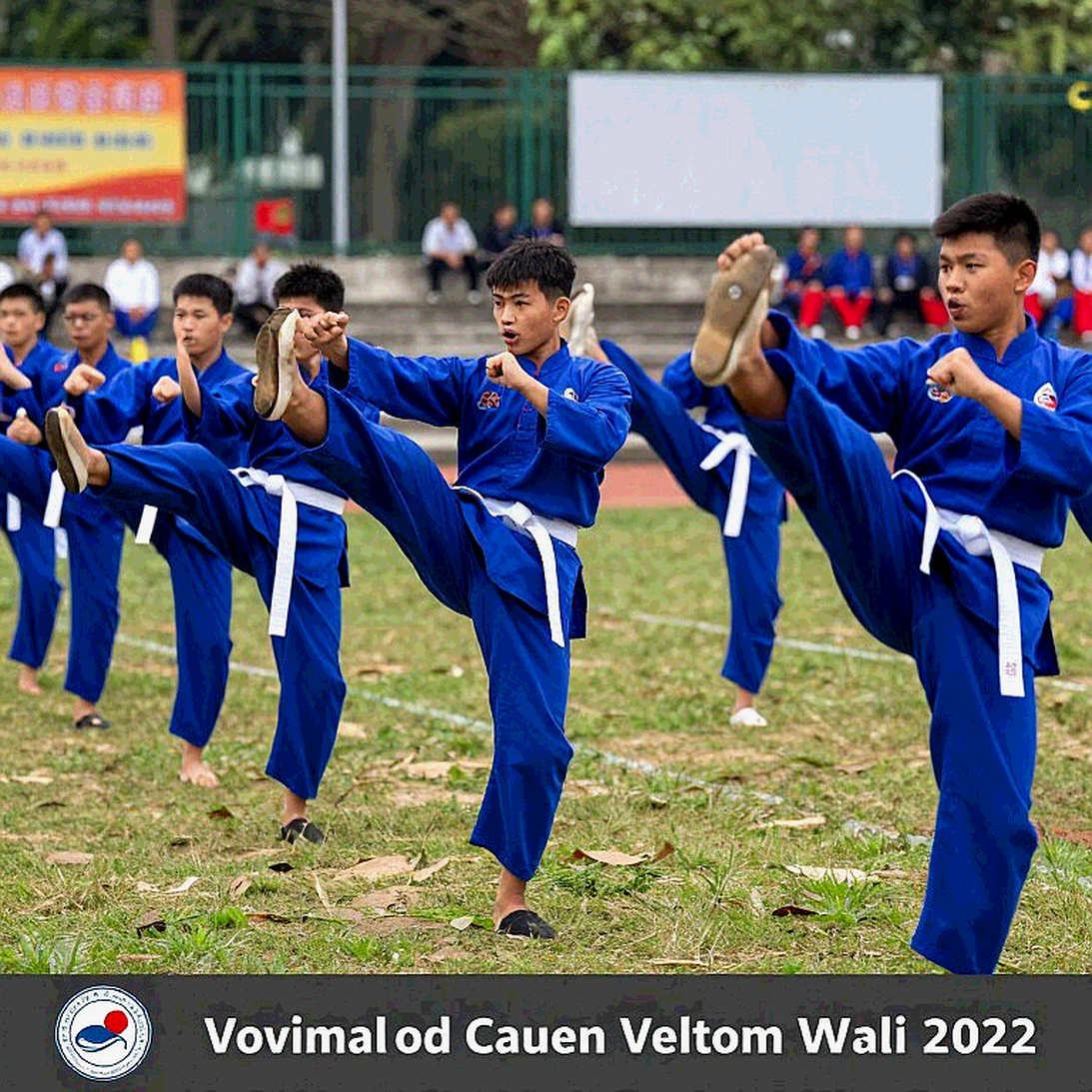
A boundary must be drawn first. Kata is not a fight. It is a choreographed forms performance, scored by a judging panel. Opponents do not share the mat, no one strikes anyone, and there is no "counter" or "style matchup." Judges weigh difficulty value, execution quality (form, power, speed, balance, breathing control) and, in team kata, synchronisation. Reading a kata result through the win-loss language of boxing or MMA would be a category error.
Vietnam's victory is therefore a performance-scoring outcome. Beating a karate power such as Iran in a final is a genuine signal of high execution quality, especially in team synchronisation. But the basis for that judgment is a results report, not a technical score sheet.
The problem with "5-0"
Under international karate rules, "5-0" is not a standard kata score line. Kata is judged by a panel awarding points, with the highest and lowest discarded and the remainder averaged. A "5-0" more closely resembles a unanimous five-judge decision or a journalist's shorthand. It is not evidence of a technical margin; until the official score sheet is available, the figure should be treated as unverified.
Kumite and individual kata
Beyond the team gold, two bronzes deepen the story. The -68 kg kumite bronze is the only element carrying real contact and injury exposure. Bùi Ngọc Nhi's individual kata bronze shows the squad's success is not merely the product of a well-drilled unit; individual technical depth exists too. Without data, however, no athlete's age, career span or international-circuit experience can be confirmed.
A 13-place rise: how durable?
The report says the gold lifted Vietnam 13 places in the medal table. Opening-day tables are highly unstable; with thin margins at the top, large jumps within hours are normal. The 13-place rise should not be read as a durable competitive shift — it is a snapshot.
A fragile top-three claim
By the report's own accounting, Vietnam sits behind Thailand (4 golds) and Myanmar (1 gold, 1 silver, 1 bronze). Vietnam has one gold, but Myanmar leads on the silver-bronze count — third place rests largely on tie-break mechanics. When a far smaller sporting economy is ahead, "leap" sounds overstated. The table should be reassessed once the Games end.
"First gold" versus "defending champion"
The most serious internal inconsistency lies here. The headline and opening paragraph call this Vietnam's "first ASIAD gold," while another passage describes the trio as having "defended their status as defending ASIAD champions." Both can be true only if "first" means first at this edition, not first ever. As written, the framing is misleading, and the scale of the historic claim cannot be settled until the contradiction is resolved.
Athlete condition and longevity
No ages, career spans or fitness data are given, so placing any athlete in a prime stage is impossible. One discipline-level truth applies: forms athletes generally enjoy longer competitive windows than full-contact athletes, because attrition comes from repetitive joint and tendon load rather than head impact. Kumite is different — impact accumulates. Weight-cutting applies only to kumite; kata athletes do not cut weight for performance.
Injury and health risk
Kata carries no meaningful head-impact exposure, so long-term neurological risk is not applicable; the relevant risk is overuse of knees, ankles and lower back. Kumite risk is contusions, joint strains and rare fractures, generally low to moderate for a national-team athlete. The report mentions no injury, weight-cut failure or medical incident — that is an absence of evidence, not evidence of absence.
Career risk is structural
The most material risk is not physical. Karate was dropped from the Olympic programme and its commercial ceiling is low. State-supported athletes lack the pension and union structures of team-sport professionals. A narrowing of funding and visibility is a systemic risk, not an individual failing. Overall risk: low to medium.

Business: the state-delegation model
This is not a promoter-driven pay-per-view event; it is a national-delegation achievement. Promoter power, contract barriers and fight purses do not apply. Rewards typically take the form of state bonuses, not commercial payments. No sponsorship or endorsement deals are mentioned. The gold is symbolic capital, not a revenue inflection point.
Rules and governance
No rule breach, sanction or controversy is implied; compliance risk is low. One interpretive risk remains: the "5-0" description does not match the panel-scoring model. Which rules version was used, and what anti-doping regime applied, is unknown. Missing information should not be read as a clean bill of health.
The Olympic question and teqball
After debuting at Tokyo 2026, karate was left off the Paris 2026 programme. Continental Games are therefore a disproportionately important stage for karate athletes — especially in a Japan-hosted edition — while also reminding observers how limited the sport's top tier is. The teqball medal mentioned in the report sits outside this domain, illustrating how combat and non-combat sports blur on a single medal table.
Public narrative
Labels such as "golden girls" are emotional and promotional language, not analysis. The narrative rests on national pride, which is real and immediate. But it will likely last days to weeks within the Games news cycle, because the report offers no performance data to support sustained dominance.
Industry transmission
The clearest transmission runs from grassroots to state funding priority: historic medals in Asian sporting systems tend to raise budget allocation and youth enrolment. Broadcast and equipment effects are neutral to mildly positive. Betting and data markets are negligible for kata and continental karate, so that branch is not applicable. Influencer crossover is unlikely, because the forms discipline lacks the viral knockout highlight. The teqball medal instead signals a broadening medal-hunting strategy.
Conclusion
This is a national-pride, medal-table news item, not a technical breakdown. Its sporting substance is real and notable, but it is low on data and high on sentiment. Five things need verification: whether "first gold" means first at this edition or first ever; what the official score sheet says about "5-0"; the true medal table after the Games; the trio's prior ASIAD record; and independent confirmation of the results. Until then, the event is best treated as an immediate, historically significant but analytically immature milestone.